
Published evidence
The peer reviewed article is a narrative synthesis of human, animal, and mechanistic literature relevant to reward system modulation. It does not report a randomized clinical trial conducted by the author.
Published research
A transdiagnostic hypothesis connecting ibogaine’s reported neurobiological actions to shared dysfunction in reward valuation, motivation, and reinforcement.
Peer reviewed · 2025The proposal
Addiction, trauma related disorders, obsessive compulsive disorder, eating disorders, and affective conditions are not one pathology. They may nevertheless share partial disruptions in reward valuation, motivational salience, prediction error, and reinforcement learning.
The published article asks whether ibogaine’s neurotrophic and receptor level actions could influence these shared processes. Its contribution is a testable transdiagnostic model. It does not establish that ibogaine restores reward function across diagnoses.
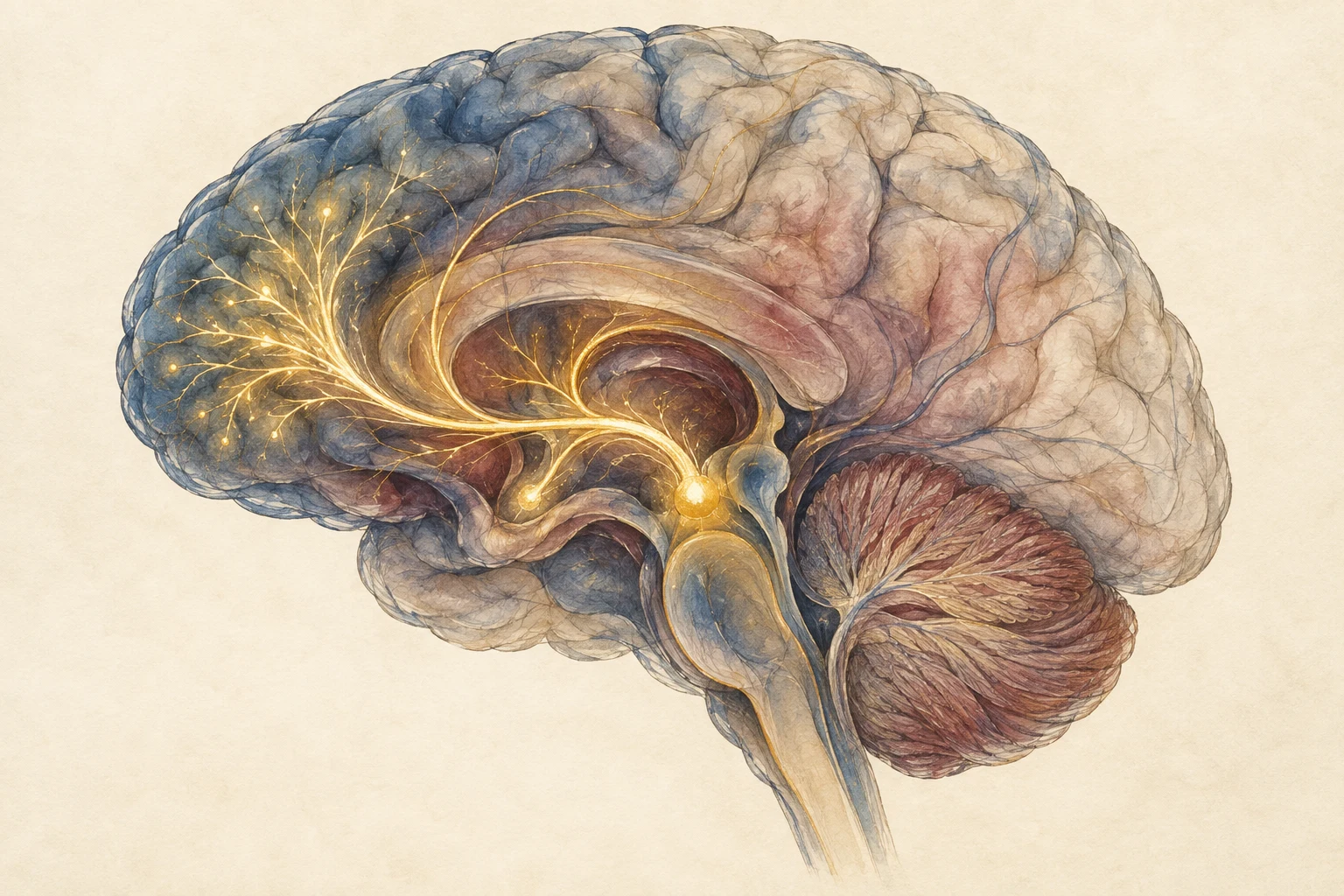
Inside the reward network
The peer reviewed article is a narrative synthesis of human, animal, and mechanistic literature relevant to reward system modulation. It does not report a randomized clinical trial conducted by the author.
Ibogaine’s reported effects on GDNF signaling, dopamine, glutamate, and plasticity may converge on processes relevant to reward valuation and reinforcement. This proposal requires direct testing.
Reports of withdrawal reduction and behavioral change motivate study but cannot by themselves establish efficacy, mechanism, or generalizability.
Animal and cellular findings support plausible biological pathways. They do not demonstrate equivalent therapeutic effects in humans.
The central test is whether ibogaine produces measurable changes in reward circuit responsivity and reinforcement learning, and whether similar changes appear across diagnostic groups.
Safety boundary
Ibogaine can prolong cardiac repolarization through hERG channel inhibition and has been associated with serious adverse events and fatalities. The research argument for continued study does not support self administration or individualized medical guidance.
This website does not provide dosing, medication discontinuation, screening, or treatment instructions. Qualified medical oversight is necessary wherever ibogaine is being considered.
 Frontiers in PharmacologyVolume 16 · Article 1744383 · Published December 4, 2025