

Mark Nicolas ·
My FDA Public Comment on Psychedelic Care
Training, patient safety, access, and data standards for the potential future therapeutic use of psychedelic drugs.

On September 14, 2026, I offered an oral public comment at FDA’s hearing, Considerations for Potential Future Therapeutic Use of Psychedelic Drugs. My expanded written submission addresses the four topic areas FDA identified and the nineteen substantive discussion areas within them. The full comment appears below, including its appendices and references.
The written comment is dated September 30, 2026, and was submitted on October 3, 2026, to docket FDA-2026-N-7542. The recommendations are my own. The original submitted PDF is available alongside this web edition.
The report is archived on Zenodo with a permanent DOI: 10.5281/zenodo.23123873.
The September 14 hearing
FDA’s official recording and agenda document the hearing. I am listed in the agenda’s virtual public comments under provider training and credentialing and promotion of patient safety.
Watch the official recording on YouTube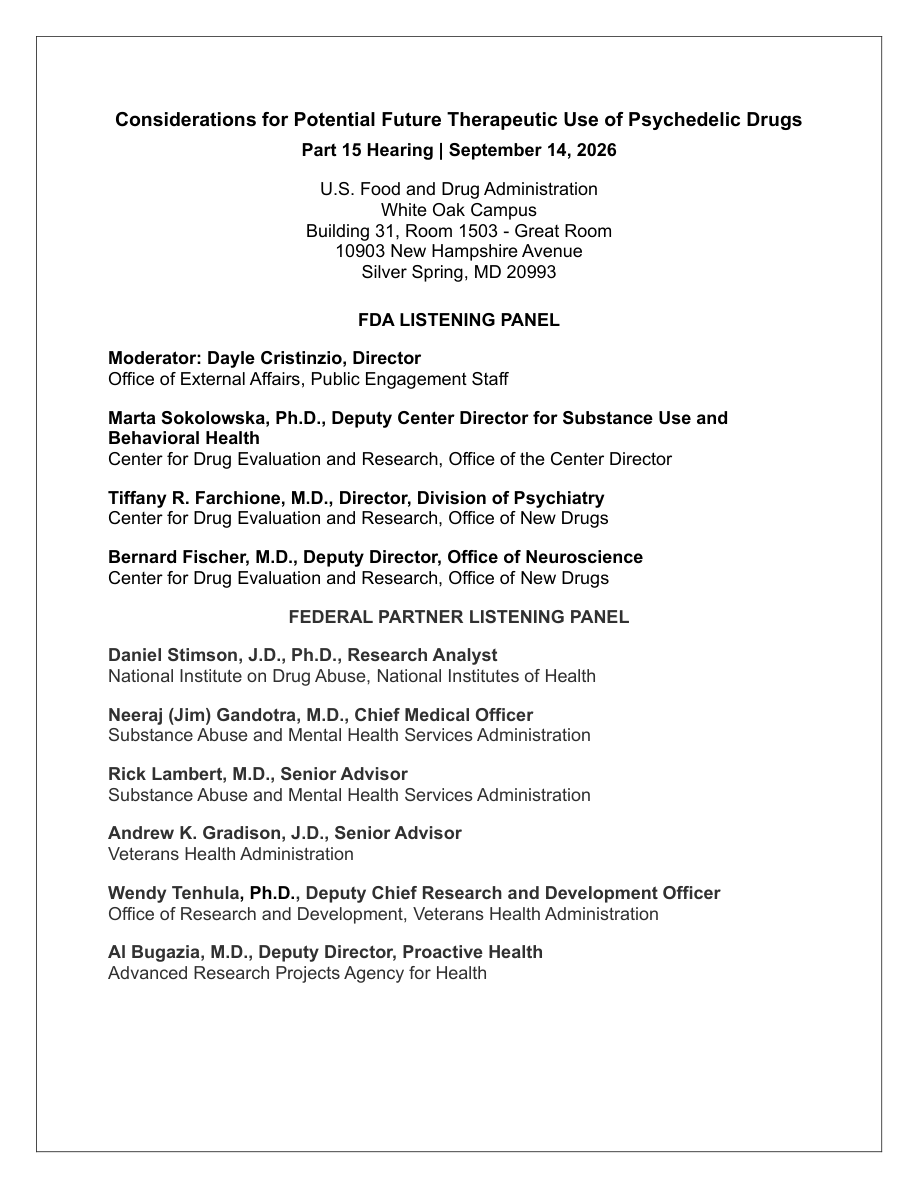
Web edition of the submitted written comment. The original PDF preserves the submission’s pagination and formatting.
Executive Summary
FDA is asking the right questions at the right point in the development of this field. The issue is no longer limited to whether a particular compound can produce a clinically meaningful effect under research conditions. We know that these medicines work, and we know that the public needs safe access as soon as possible. When psychedelic drugs become part of ordinary health care, the harder problem will be building a system that can deliver them without recreating familiar failures of behavioral health care, while also accounting for risks that are unusually prominent in altered states. Those risks include impaired judgment, increased suggestibility, intensified transference and attachment, medical vulnerability, blurred professional boundaries, and the possibility that a participant may temporarily become unable to evaluate the people around them as they ordinarily would.
My view is that psychedelic clinicalization requires a care architecture rather than a certificate. That architecture begins with multidisciplinary oversight and clearly bounded scopes of practice. It requires substantial supervised experience, not simply didactic completion, and it should preserve a legitimate facilitator role for people who are not licensed clinicians while making equally clear that a nonclinical title cannot be used to perform psychotherapy, diagnose, prescribe, manage medications, or assume medical responsibilities. During acute administration, at least two trained people should be present with any one participant at all times, with additional personnel available for relief, medical escalation, and replacement when a participant develops a strong adverse reaction to a particular staff member.
The same framework must protect the participant before and after the dosing session. Screening should be repeated, risk-stratified, and specific to the intervention's pharmacology. Informed consent should be continuous rather than treated as a form signed before dosing, especially when touch, bodily assistance, privacy, and power imbalance are involved. The physical setting should be calm, humane, culturally responsive, and trauma-informed without sacrificing emergency capability. Post-acute follow-up should be treated as part of the intervention because people return to environments that may contain the same stressors, relationships, substance use cues, instability, or isolation that preceded treatment.
Access must also be designed intentionally. Coverage cannot be limited to the cost of the drug while ignoring screening, preparation, staffing, monitoring, facility time, follow-up, and clinically necessary integration or continuing care. Payors should be able to verify that a provider meets the governing standard, but they should not become a second licensing authority or create unnecessary administrative barriers that make an approved treatment functionally inaccessible. At the same time, the field should take seriously the people who are most likely to be excluded from expensive new models of care, including rural patients, people with limited financial resources, people with severe substance use disorders, and people returning from incarceration or military service.
Finally, the data system should be designed before widespread implementation, not after problems emerge. I support interoperable common data elements, registries, meaningful adverse event classification, and longitudinal outcome measurement. I do not support routine export of raw, identifiable narratives from acute psychedelic states into broad health information exchanges, payer systems, or government surveillance databases. The scientific system needs structured safety and outcome data; it does not need a searchable national archive of the most private, disorganized, symbolic, or extraordinary things people say while profoundly altered. The distinction between pharmacovigilance and surveillance is not semantic. It is central to trust, privacy, and ultimately access.
Perspective and Scope of This Comment
I previously offered a brief oral comment at FDA's September 14 hearing. This written submission expands that testimony and answers each of the nineteen substantive discussion areas identified in the Federal Register notice. My perspective comes from roughly eighteen years across clinical and prehospital medicine, addiction and recovery settings, psychedelic facilitation, psychology training, and research. I am a former Fleet Marine Force Corpsman, and much of my current work has focused on translating safety, competency, and longitudinal measurement questions into practical educational tools.
I have developed an open-access Global Competencies framework organized around thirteen professional functions and fifty criteria, a developmental precursor called Before Competence Comes Fitness, and a detailed safety framework for higher-acuity psychedelic care. I reference those projects because they show how I have worked through the operational questions FDA is asking. Any national standard should undergo multidisciplinary review, empirical testing, public scrutiny, and revision. The field has already accumulated enough private certification programs that it would be a mistake to let the existence of a curriculum become evidence that the curriculum is adequate.
I also want to be explicit about the limits of my comments. FDA has asked that commenters not use this docket to argue the safety or effectiveness of a particular drug product, the scheduling of a substance, legalization or decriminalization, personal nonmedical use, or individual disputes with specific practitioners or organizations. I have therefore kept product-specific examples to the level necessary to illustrate general safety principles. Where my recommendation goes beyond an established evidence base, I identify it as a policy judgment rather than dressing it up as a scientific conclusion.
Provider Training and Credentialing
Evidence base for training curricula and the bodies that should develop, review, and endorse them
I favor a federated governance structure: a national multidisciplinary body that establishes minimum standards, paired with state-level boards that implement, credential, investigate, and discipline within their jurisdictions. The federal umbrella should define a common floor for competencies, ethics, participant rights, data standards, portability, and minimum safety expectations. State boards should retain responsibility for fitting those expectations into professional practice law, facility regulation, and local accountability systems. This arrangement is imperfect, but it is more coherent than fifty unrelated systems and more respectful of existing state authority than a single centralized licensing structure that attempts to replace every professional board already in existence.
The governing bodies themselves need to reflect the actual work. Psychedelic care crosses medicine, psychiatry, psychology, nursing, addiction treatment, pharmacy, emergency care, ethics, research, education, and community support. It also intersects with spiritual and existential experience in ways that ordinary medication management often does not. For that reason, oversight should include medical professionals, mental health clinicians, addiction specialists, pharmacology expertise, emergency and acute care expertise, educators, researchers, participant advocates, and people with relevant lived experience. I say that with a full understanding of how complicated an undertaking it would be, it is necessary. Historically marginalized communities should also have meaningful representation rather than being invited after the rules are already written. That is both an equity issue and a practical safeguard against building a system that only works well for the populations that dominated early trials.
Indigenous expertise deserves a specific place in that structure. Contemporary medical use of psychedelics did not arise in a historical vacuum, and several substances now being studied have long-standing Indigenous or traditional contexts. Including Indigenous knowledge holders does not mean converting ceremonial authority into medical licensure or treating traditional knowledge as interchangeable with biomedical evidence. It means recognizing sovereignty, cultural and intellectual property, reciprocity, and the fact that cultural context can affect how people understand preparation, meaning, community, risk, and recovery. McGuire and colleagues reached consensus that Indigenous and historically marginalized perspectives should be represented in policymaking and training, while Celidwen and colleagues articulated ethical principles intended to prevent extractive appropriation of traditional knowledge (McGuire et al., 2024; Celidwen et al., 2023). More recent scholarship has continued to emphasize reciprocity, governance, and cultural humility (Gearin et al., 2026; Magar et al., 2026).
Training standards should be competency-based, evidence-traceable, externally reviewable, and periodically revised. Phelps identified core psychedelic therapist competencies well before the current expansion of training programs, and Palitsky and colleagues recently documented substantial variation across United States facilitation programs (Phelps, 2017; Palitsky et al., 2026). That variability makes independent standards more important. Training organizations should not be allowed to function as their own sole accreditor, examiner, and disciplinary authority. A national framework should specify what a competent practitioner must demonstrate, while allowing multiple educational pathways to teach those competencies if they can show that their graduates actually meet them.
Personnel and training needs by phase of care, including minimum staffing and nonprescriber roles
The field needs to stop treating the word facilitator as though it describes every function surrounding a psychedelic session. Screening, prescribing, medical interpretation, psychotherapy, preparation, acute support, emergency response, postacute care, peer support, and care coordination are different activities. They require different training and, in several cases, different legal authority. A safe system can include people from many backgrounds, but it cannot blur responsibility so thoroughly that nobody is clearly accountable for the task being performed. That said, everyone involved should fully understand every element of the process.
I do not believe an existing clinical credential should be required simply to enter facilitator training. A legitimate nonclinical facilitator role can exist. That person can provide structured presence, orientation, basic grounding, environmental support, observation, practical assistance, and escalation within a defined protocol. What the role cannot do is expand into diagnosis, psychotherapy, medication management, independent medical decision making, or treatment of conditions outside the person's license and competence. The substance of the activity should determine the scope. A coaching label should not become a loophole for providing psychotherapy without the training, supervision, and accountability psychotherapy requires.
This distinction matters most in preparation and integration. Bathje and colleagues found that psychedelic integration is used to describe a wide range of practices delivered by therapists, coaches, and other practitioners, which makes the term too broad to function as a scope boundary by itself (Bathje et al., 2022). Preparation can include education and expectation setting, but it can also become trauma processing, psychiatric assessment, behavioral treatment, or psychotherapy. Integration can involve practical reflection, but it can also become the treatment of a mental disorder. Programs should therefore define the tasks being performed rather than assume that calling something preparation, coaching, or integration settles the legal and clinical question. My recommendation is, once again, multidisciplinary in nature. I believe that having a licensed therapist approve of material taught by coaches is a minimum standard, while having a team present and available would be preferred.
During acute administration, I believe there should always be at least two trained, sober personnel present with one participant throughout the period of clinically significant drug effect. The participant should not be left alone, and a single practitioner should not be left alone with a profoundly altered participant. This protects the participant and the practitioner, provides team redundancy during an emergency, allows one person to get assistance without abandoning the participant, and creates a second witness when questions of touch, consent, falls, restraint, or disputed events arise. It also lets the team respond if the participant develops an abrupt, intense mistrust of one staff member. A second person gives the team a way to change the interpersonal environment rather than forcing the relationship and escalating the situation.
Two people should be the minimum, not the entire staffing plan. Long sessions require relief, and the site should have additional personnel available for replacement, medical consultation, transport coordination, or crisis response. Johnson and colleagues recommended two monitors in high-dose hallucinogen research for similar reasons, and FDA's July 2026 final guidance now expects two monitors for the duration of a treatment session in psychedelic clinical investigations (Johnson et al., 2008). I recognize that research requirements do not automatically become post-approval practice standards. In this case, however, I believe the redundancy is sufficiently fundamental that it should carry forward into clinical implementation.
Training for care coordination across primary care, behavioral health, and specialty providers
Psychedelic treatment should not become a boutique episode that floats outside the rest of health care. The participant may arrive with primary care needs, psychiatric treatment, addiction care, multiple prescriptions, cardiovascular risk, chronic pain, sleep problems, trauma, unstable housing, or active family stress. The provider who recognizes those issues does not need to become every specialist, but the system must know how to move information and responsibility to the person who can address them.
Training should therefore include closed loop referral and handoff. A referral is not complete when somebody is given a telephone number. The sending provider should identify why the referral is needed, select a competent resource, explain what information will be shared, transmit the minimum clinically necessary information, establish who is responsible during the transition, and make a reasonable effort to confirm that the person actually reached care. This is particularly important in substance use treatment, where a psychedelic intervention may sit inside a longer recovery trajectory rather than replacing evidence-based addiction care. Reviews of psychedelic approaches to substance use disorders have likewise emphasized the need to understand how these interventions fit within established treatment systems rather than treating the drug session as a self-contained cure (Yaden et al., 2024).
Care coordination training should also include cultural humility and practical accessibility. A referral that ignores language, disability, transportation, geography, insurance, family responsibilities, or cultural safety often fails. Rural participants and people from communities with limited specialty care need realistic pathways, not theoretical ones. If the clinical model depends on continuity, continuity must be operationally possible for the people needing care most.
Credentialing and licensure, including background education, experiential qualifications, supervision, and practice hours
Existing professional licensure should determine what regulated activities a person is legally authorized to perform, but it should not exempt that person from psychedelic-specific training. A physician can be excellent at medicine and poorly prepared for looking after someone in a prolonged altered state. A psychologist can be highly competent in psychotherapy and still have little experience with psychedelic pharmacology, acute behavioral disorganization, or medical escalation. A person with extensive personal psychedelic experience may understand aspects of the phenomenology and still lack the training to diagnose, treat, or manage a medical emergency. Credentials and psychedelic competence answer different questions.
I favor a substantial supervised practice requirement for anyone who intends to hold independent responsibility. The professional analogue I use is addiction counseling. In Texas, the ordinary Licensed Chemical Dependency Counselor pathway requires 4,000 hours of supervised work experience, subject to specified waiver provisions. I am not presenting 4,000 as a scientifically validated psychedelic number. No evidence establishes that exact threshold. I am arguing that a responsibility this serious deserves a developmental burden closer to an established counseling profession than to a short certificate program, and I would begin national deliberation with a benchmark of approximately that magnitude.
For psychedelic practice, I would not allow an unrelated professional degree to erase the psychedelic-specific supervised requirement. The hours can be distributed across education, observation, supervised helping, participant support, case review, documentation, emergency simulation, supervised facilitation, postacute follow-up, and other relevant functions. They do not all have to be hours in which a participant is actively under the influence of a drug. What matters is that the practitioner accumulates enough supervised exposure for judgment, boundaries, attention, escalation, and relational behavior to become visible over time.
Hours alone are still not competence. My own developmental framework separates fitness to enter practice, orientation, observation, supervised helping, supervised participant support, development across professional competencies, supervised facilitation, entrustment with responsibility, current fitness, scope, and continuing reassessment. This progression aligns with the broader professional literature on competence and scope, which recognizes that readiness and ongoing professional fitness involve more than completing formal education (Wise, 2008). It also matters in a field that attracts people whose desire to help may grow directly out of their own suffering. Research on altruism born of suffering helps explain why lived experience can become a powerful source of prosocial motivation, but the same personal history still has to be processed well enough that the practitioner can distinguish the participant's needs from their own (Staub & Vollhardt, 2008).
Personal psychedelic experiences can be significant but are not essential or sufficient for credentialing. McGuire and colleagues specifically declined to make personal psychedelic use a prerequisite for training or licensure because its clinical value remains an empirical question (McGuire et al., 2024). I agree. Lived experience should be respected as one form of knowledge, not converted into an unrestricted license to practice.
Promotion of Patient Safety
Patient education, counseling, side effect assessment, and setting
Preparation is a safety intervention. Before administration, participants should understand the expected duration of effects, common physiological and psychological responses, uncertainty about the course of the experience, what monitoring will occur, who will be in the room, what each person is authorized to do, what emergency procedures exist, what conditions could delay or stop treatment, how discharge is determined, and how to obtain help afterward. Education should be written in language the participant can understand and should be available in accessible formats and languages appropriate to the population being served.
Set and setting are also more than aesthetic concepts. Expectation, interpersonal context, preparation, sensory environment, and the participant's sense of safety can influence the acute experience (Hartogsohn, 2016; Johnson et al., 2008). A treatment room should therefore be comfortable, private, and low in unnecessary stimulation while remaining medically functional. Trauma-informed design matters here. Participants with histories of assault, combat, institutionalization, discrimination, or coercive care may respond very differently to visible restraints, alarms, uniforms, bright lights, locked doors, or staff who enter without explanation. Accessibility for people with physical disabilities, sensory sensitivities, or neurodivergence should be designed into the environment rather than improvised after a participant arrives. I believe group settings can be beneficial, and they should be an option for participants in some cases. Community can be a big part of the medicine.
The practitioner is part of the setting. Their demeanor, beliefs, confidence, assumptions, and language can shape the participant's interpretation of what is happening. That creates an obligation for epistemic humility. Psychedelic states can produce experiences that feel revelatory or absolutely certain while leaving the external truth of the interpretation unresolved. Clinicians and facilitators should help participants examine meaning without using professional authority to declare that a spiritual, autobiographical, metaphysical, or diagnostic interpretation is objectively true. Work on epistemic risk in psychedelic care has made this problem increasingly explicit (Caporuscio & Fink, 2026). Cultural humility is equally important because an experience interpreted as spiritual, ancestral, somatic, pathological, or symbolic in one framework may be understood differently in another (Gearin et al., 2026).
Informed consent, power imbalance, therapeutic touch, and challenging experiences
Consent in psychedelic care should be treated as a process that continues through the entire episode of care. A participant can sign a valid consent form before dosing and later become frightened, confused, highly suggestible, dependent, or unable to communicate with ordinary precision. FDA's final guidance explicitly recognizes prolonged changes in perception, cognition, judgment, vulnerability, and suggestibility during treatment. That recognition should affect how clinical consent is practiced, not merely how the risk is described on paper.
Before the session, participants should receive concrete explanations of touch, movement, toileting, privacy, staff changes, recording, environmental adjustments, communication, and emergency intervention. Touch should be discussed by category rather than covered by a vague statement that supportive touch may occur. Hand holding, a hand on the shoulder, assisted walking, repositioning for safety, massage, pressure, breathwork, and other somatic techniques are not ethically interchangeable. Consent to one does not imply consent to the others. McGuire and colleagues reached consensus that patients should participate in decisions about supportive touch and should be able to refuse it during a session, while recent qualitative research has documented the ethical complexity of touch in psychedelic care (McGuire et al., 2024; McHerron et al., 2025).
A participant's refusal should therefore remain meaningful during the acute state unless an immediate safety emergency requires proportionate intervention. Sexual contact with a participant should be categorically prohibited within the treatment relationship and through a defined period afterward. Programs should also address less obvious forms of boundary pressure, including financial dependence, spiritual authority, dual relationships, inappropriate self-disclosure, private messaging, and the gradual shift from a professional relationship to one the participant may feel unable to leave.
Power deserves direct discussion in the consent process because psychedelic states can intensify attachment, gratitude, fear, erotic feelings, parental attribution, spiritual significance, and perceptions of authority. This is not a reason to treat participants as incapable. It is a reason to hold practitioners to a higher standard. Whenever possible, participants should have meaningful input into who will be present with them, and programs should accommodate reasonable preferences related to gender, trauma history, cultural safety, and prior experiences of discrimination or abuse. A participant who becomes acutely mistrustful of a particular staff member should have access to another qualified person rather than being told that the reaction is merely part of the process and must be endured.
Screening for medical and psychiatric conditions associated with greater risk
Screening should be multidomain, compound-specific, and repeated close enough to administration to detect meaningful change. Initial screening can occur remotely and should include medical history, psychiatric history, current symptoms, prior psychosis or mania where relevant, suicidality, medications, supplements, substance use, withdrawal risk, previous psychedelic exposure, previous adverse responses, cardiovascular history, treatment goals, social supports, and the conditions to which the participant will return. Drug interaction reviews are essential because the evidence base remains incomplete, and concomitant medications can attenuate, potentiate, or alter effects (Sarparast et al., 2022; Halman et al., 2024). More recent work also shows that automatic medication discontinuation is not benign and can introduce risk (Tap et al., 2025).
The remote screen should not be the final screen. Once the participant arrives, the program should confirm that the person in front of the team is clinically consistent with the history provided. Participants should know before traveling or paying that material discrepancies may lead to deferral. That clarity reduces the incentive to conceal information once someone has invested money, time, and hope in reaching the treatment date. The final evaluation should include objective measures appropriate to the intervention, such as vital signs, toxicology, laboratory testing, medication reconciliation, ECG evaluation, or a direct mental status examination. A current state of psychosis, medical instability, clinically consequential intoxication, unsafe withdrawal, or another condition outside the program's capability should stop the process until the risk is resolved.
Risk stratification should not become indiscriminate exclusion. FDA's final guidance advises that development populations be representative of the people expected to receive treatment and cautions against unnecessary exclusion of groups that will ultimately be part of the intended population. That principle should carry into implementation. The field already has a representation problem. Hughes and Garcia-Romeu found persistent ethnoracial underrepresentation in psychedelic clinical studies, which limits generalizability and leaves important safety questions less well characterized for the very populations that have often had the least access to research (Hughes & Garcia-Romeu, 2024). Screening needs to protect people without turning uncertainty into a blanket reason to exclude them from care or from the evidence base.
For interventions with material physiological liability, medical assessment should reflect the whole clinical picture rather than one isolated number. Rate, rhythm, conduction, repolarization, blood pressure, symptoms, electrolytes, medication exposure, and temporal trajectory may all be relevant depending on the compound. The person interpreting those findings should be qualified to do so. A facilitator can notice that a participant appears medically unwell and summon the appropriate clinician; noticing a problem does not confer authority to treat it.
Diversion and nonmedical use
Once a psychedelic drug is approved for supervised use, diversion control should be rigorous but not theatrically punitive. Storage should be locked, access restricted to authorized personnel, and inventory reconciled against records of receipt, preparation, administration, waste, return, and destruction. Every dose should be traceable from arrival at the facility through its final disposition. Material discrepancies should trigger prompt investigation and documented resolution.
I would use a comprehensive quarterly inventory audit as a baseline operational expectation, with more frequent reconciliation when the product, setting, or governing controlled substance rules require it. The model I have in mind resembles the disciplined medication accountability used in large health systems, including the Department of Veterans Affairs, where chain of custody and recurrent reconciliation are ordinary safety practices. Security should be strong enough to prevent diversion without making the therapeutic environment itself feel custodial. The medication room can be highly secure while the treatment room remains humane.
Diversion policy should also be product-specific. Different compounds may eventually have very different dosing schedules, abuse profiles, formulations, or administration requirements. FDA's current development guidance already anticipates assessment of abuse potential, nonmedical use, accidental exposure, overdose, and possible postmarketing risk mitigation. A future system should therefore establish common principles of accountability while allowing the actual controls to match the risk of the approved product.
Mechanisms to prevent, detect, and report ethical violations
The psychedelic field cannot rely on ethics training alone. A practitioner can pass a course on boundaries and still exploit a participant. Prevention requires structure: explicit conduct standards, recurrent supervision, two-person staffing during acute administration, clear documentation, accessible grievance procedures, and disciplinary systems that do not depend on the goodwill of the organization being accused. The same features that can make psychedelic care therapeutically powerful, including trust, attachment, emotional openness, and altered attribution of meaning, can also amplify the consequences of misconduct.
Every program should have a reporting pathway that reaches outside the immediate treatment relationship. Participants should be able to report concerns without confronting the practitioner directly. Staff should be able to report a supervisor, owner, or senior clinician without retaliation. State boards should have authority to investigate, obtain records, impose corrective requirements, suspend practice, and communicate substantiated disciplinary findings so that a practitioner cannot simply move between organizations while the next site remains unaware of a serious history.
The system should also identify deteriorating practitioner fitness before misconduct occurs. Repeated boundary pressure, rescuing behavior, fixation on one participant, attraction or aversion, refusal of supervision, excessive self-disclosure, fatigue, impaired attention, and chronic scope drift are not all disciplinary offenses, but they can be warning signs. A mature system should create intermediate responses such as consultation, additional supervision, temporary relief from duties, remediation, and reassessment. Wise's work on competence and professional development is useful here because it frames continuing competence as an active responsibility rather than a permanent status granted at licensure (Wise, 2008).
Equity matters in this domain because power does not fall evenly across patients. People who have experienced sexual violence, racialized medical mistreatment, incarceration, disability discrimination, poverty, or coercive psychiatric care may have good reasons to distrust institutions and may have less confidence that a complaint will be believed. Complaint systems should therefore be accessible, trauma-informed, culturally responsive, and available in multiple formats and languages. Representation on oversight bodies helps make that promise credible rather than symbolic.
Monitoring during and after administration, follow-up, emergency response, and crisis services
Monitoring should be calibrated to the compound's pharmacology, dose, route, expected duration, patient characteristics, medications, known physiological liabilities, psychiatric risk, mobility, and facility capability. It would be a mistake to impose the highest acuity monitoring package used for one intervention onto every future psychedelic. It would be equally mistaken to assume that a comfortable room and experienced facilitator are sufficient protection when the compound or patient presents meaningful medical risk. The regulatory standard should be risk proportionality with a clearly defined minimum.
Every site needs an emergency plan rehearsed before it is needed. Staff should know who leads, who calls for help, who stays with the participant, what equipment is immediately available, when to activate emergency medical services, and where the participant will be transferred. Programs should have established relationships with emergency and psychiatric crisis services appropriate to the care they provide. A psychologically difficult experience should not automatically be pathologized, but clinically significant deterioration should never be explained away as spiritual content or a necessary part of healing. Medical assessment and psychological containment have to coexist.
Discharge should be based on functional recovery and risk, not simply on elapsed time. The participant should be sufficiently oriented, medically stable, able to ambulate or transfer safely as appropriate, and able to follow the discharge plan. Driving restrictions, responsible transportation, medication instructions, emergency contacts, and post-discharge expectations should be explicit. FDA's final guidance already emphasizes quantitative and qualitative characterization of acute effects to inform discharge and driving safety, which is a sensible foundation for clinical practice. With ibogaine, for example, observation should persist long after the acute phase has resolved.
The monitoring obligation also extends past the door. In less clinical language, I think of the early postacute period as a soft shell period. A person may leave a powerful experience more open to change, while the environment they return to has not changed at all. The same relationship conflict, substance use cues, financial stress, sleep disruption, isolation, or instability may be waiting for them. That analogy is not a biological claim. It is a practical reminder that the participant's post-treatment environment belongs in the safety plan, which begins at preparation.
Longitudinal follow-up is supported by both the emerging literature and FDA's current development guidance. Systematic reviews document enduring psychological changes as well as rare but consequential adverse outcomes, while FDA recommends assessing durability and following participants well beyond an early efficacy endpoint in chronic conditions (Aday et al., 2020; Hinkle et al., 2024; Romeo et al., 2024). The schedule should be tailored to the intervention and population, but the system should have predetermined contact points, an accessible route back into care, and clear triggers for escalation to psychiatry, addiction treatment, emergency services, or other specialty care.
Considerations for Access
Coverage, benefit design, reimbursement, payment models, and economic analysis
This is the part of the docket in which I have the least direct expertise, so I do not want to pretend to know more about reimbursement mechanics than I do. My closest practical comparison is residential addiction treatment, where multidisciplinary care can be extremely expensive, and payer decisions can determine whether a patient receives enough time to stabilize. My concern is straightforward: if an approved psychedelic treatment requires screening, preparation, several hours of monitored administration, specialized staffing, follow-up, and possibly integration or a structured transition period, coverage has to account for the actual episode of care. Paying for the molecule while underpaying everything that makes the administration safe would create access on paper and scarcity in reality.
Economic studies reinforce how important professional time can be. In a published cost-effectiveness model of MDMA assisted therapy for posttraumatic stress disorder, clinician compensation represented the large majority of the modeled intervention cost (Marseille et al., 2022). A separate decision analytic model of psilocybin assisted therapy for severe depression likewise demonstrates that the health economics are sensitive to treatment structure and assumptions rather than reducible to drug acquisition cost alone (McCrone et al., 2023). These studies do not prove that every psychedelic treatment will be cost-saving. They do show why reimbursement policy has to evaluate the complete care pathway.
For an FDA-approved indication, authorization should not be made needlessly restrictive. An insurer should be able to apply reasonable medical necessity criteria consistent with the approved indication and evidence. It should not create arbitrary severity thresholds, excessive step requirements, or repetitive prior authorization processes that effectively reserve treatment for people already in crisis. McGuire and colleagues reached consensus around parity of public and private insurance coverage for approved psychedelic medicines used to treat mental illness, while Belouin and colleagues have argued that equitable access has to be designed alongside safety and accountability rather than treated as a separate concern (McGuire et al., 2024; Belouin et al., 2022).
I also believe the clinical model should allow a residential or structured transition option when the patient's circumstances justify it. That should not become a universal requirement because it would make care prohibitively expensive. It should be available for people whose immediate return environment is so unstable that a brief period of structured support materially affects safety or continuity. In addiction treatment, arbitrary day limits can cut care off because the calendar says the benefit ended. Psychedelic care should not repeat that mistake if the evidence indicates that a particular patient still needs a higher level of support.
Preparation and coordination between providers and payors
Payors should participate early enough in implementation so approved services are deliverable when they become available. Coverage policies need to recognize the distinct components of the episode, including screening, administration, monitoring, facility time, and follow-up. They should also be transparent about required documentation and provide a timely appeal process when coverage is denied. Delays matter in populations with serious psychiatric illness and substance use disorders, especially when the alternative is continued deterioration while paperwork moves between organizations.
At the same time, insurers should not become a second professional licensing system. If a practitioner meets the qualifications established by the relevant state board, professional license, and psychedelic-specific credentialing structure, a payor should be able to verify those facts. It should not create a private, proprietary competency regime that conflicts with the public standard unless there is a clearly defensible reason related to network quality or patient safety. Provider accountability belongs in a system where standards are visible, appealable, and subject to public oversight, not hidden inside contracts that vary from insurer to insurer.
Coordination should also account for people most likely to fall through administrative cracks. People with unstable housing, limited transportation, low income, rural residence, disability, limited English proficiency, or recent incarceration may have difficulty satisfying a fragmented sequence of appointments even when each individual appointment is technically covered. Access policy should therefore evaluate the burden imposed by the entire pathway, not merely whether each service exists somewhere in the network.
Workforce, physical space, scheduling, storage, security, and clinic capacity
Clinical capability should not dictate clinical appearance. A psychedelic site may need a crash cart, oxygen, suction, monitoring equipment, secure medication storage, trained medical personnel, transfer agreements, and emergency protocols without looking like an emergency department. For many participants, a visibly institutional room can heighten apprehension and undermine the conditions the team is trying to create. Johnson and colleagues described comfortable, noninstitutional environments as part of safe hallucinogen research, and the broader set-and-setting literature supports the relevance of physical context (Johnson et al., 2008; Hartogsohn, 2016).
Therefore, outpatient clinics and residential facilities that are properly equipped should be allowed when their capabilities align with the anticipated risks. Lower acuity interventions should not automatically be forced into hospital-level environments. Higher-acuity interventions should not be placed in aesthetically pleasing settings that lack the equipment, expertise, and transfer capacity their risks require. The objective is not to choose between healing space and medical safety. It is to design both into the same environment.
The workforce model also has to be honest about time. Some sessions last many hours, and continuous presence is cognitively and emotionally demanding. Staffing plans need relief, breaks, handoff procedures, and backup coverage. A system that requires vigilance while normalizing exhausted practitioners will eventually fail. Practitioner fitness is partly an individual obligation and partly an organizational one. Schedules, workload, staffing ratios, and the ability to step out without abandoning the participant all affect whether a competent person can actually perform competently on a given day.
Medication security should be stringent and routinely audited, as described above, but those controls can remain outside the participant's visual field. Clinic capacity planning should also address private space, accessible bathrooms, mobility needs, sensory accommodations, family or support person policies, and areas for safe postacute observation. These details are mundane compared with pharmacology, but they determine whether the care model works for actual patients rather than idealized study participants.
Telehealth screening, follow-up, and care coordination
A large portion of the preparatory pathway can occur through telehealth when clinically appropriate. Providers can conduct initial history, psychiatric screening, education, informed consent discussions, medication review, care coordination, and much of follow-up remotely. Evidence from general telepsychiatry shows substantial diagnostic and symptom assessment concordance with face-to-face evaluation across many conditions, while also showing that suitability varies by disorder, symptom, and modality (Fujikawa et al., 2025). That is the right lesson for psychedelic care: telehealth is useful, but it is not universally interchangeable with in-person assessment.
Before drug administration, the participant should undergo a final assessment to verify current clinical status and complete any objective measures the intervention requires. If an ECG, toxicology test, laboratory study, physical examination, direct neurological assessment, or other in-person evaluation is clinically necessary, telehealth cannot substitute. A program should also be prepared to convert a remote follow-up to in-person care when the provider cannot adequately evaluate suicidality, psychosis, cognitive change, medical symptoms, or another safety concern through video or telephone contact.
Telehealth can expand rural and mobility-limited access, but it can also create a new exclusion for people without reliable broadband, private space, digital literacy, language support, or appropriate devices. Programs should retain telephone and accessible alternatives where feasible and should not make technological sophistication a hidden eligibility criterion. Privacy planning is especially important because psychedelic follow-up can involve highly sensitive mental health, trauma, substance use, and spiritual content.
Best Practices for Data Collection and Standardization
Data repositories and coordinated registry networks for real world safety
I strongly support coordinated registries, provided they are built for safety science rather than indiscriminate surveillance. Individual clinics will not see enough patients to characterize rare events, delayed outcomes, or interactions that only become visible across large populations. A national or federated registry could identify patterns by drug, dose, indication, comorbidity, medication exposure, staffing model, setting, and phase of care. The important point is that the registry needs denominators. A dramatic case report can identify a possible hazard, but it cannot tell us how often the event occurs.
Near misses should be part of that system. A contraindicated medication caught before dosing, an abnormal ECG that leads to deferral, an electrolyte problem corrected before administration, an incorrect product intercepted before use, or a monitoring failure detected before injury all contain safety information. If registries count only injuries, they miss the system weaknesses that good staff prevented from becoming injuries.
Registry governance should include clinicians, researchers, statisticians, privacy expertise, patient representatives, and people from communities likely to be affected by data collection. Marginalized populations have historical reasons to be cautious about surveillance and secondary uses of health information. Including those communities in governance is not cosmetic. It helps ensure that a system intended to improve safety does not inadvertently suppress participation by making people fear what will happen to their data.
Coordination across EHRs, claims, pharmacy data, registries, adverse event reports, patient and clinician outcomes, surveillance systems, surveys, and state programs
Different data sources answer different questions, and the system should preserve those differences rather than merging everything into one undifferentiated record. Claims data can show utilization and cost but usually contain little phenomenological detail. Pharmacy data can document dispensing and exposure but not psychological outcome. EHRs contain clinical context but vary dramatically in structure and documentation quality. Patient-reported outcomes capture experiences unavailable from physiology alone. Clinician reports add professional observation but can also add interpretation. Registries can create structure, but only if participation and follow-up are complete enough to support inference.
Data from state psychedelic programs and nonmedical settings can contribute to public health knowledge, but provenance must remain explicit. A self-reported dose from a naturalistic setting is not methodologically equivalent to a verified product administered in an FDA-regulated clinical program. A ceremonial setting is not equivalent to an outpatient psychiatric clinic. Those observations can still be useful if the data model identifies source, product certainty, dose certainty, supervision, setting, ascertainment method, and follow-up completeness. The scientific mistake would be either to ignore those data entirely or to pool them as though context did not matter.
This is also where representative data become essential. The psychedelic evidence base has historically underrepresented racial and ethnic minority populations, which limits generalizability and can conceal subgroup differences in access, experience, or outcomes (Hughes & Garcia-Romeu, 2024). Future data systems should support evaluation across race, ethnicity, sex, gender, age, disability, geography, socioeconomic context, and other variables relevant to equity and generalizability, while collecting only what serves a legitimate clinical or scientific purpose and protecting those variables from discriminatory secondary use.
Common data elements across sources for drug, dose, indication, setting, and patient characteristics
Psychedelic medicine needs common data elements before widespread implementation makes harmonization much harder. Kush and colleagues describe the role of common data elements in making clinical research data more interoperable and reusable, and the principle applies directly here (Kush et al., 2020). At minimum, the system should be able to represent the drug and formulation, dose, route, exposure timing, product and lot when applicable, indication, treatment setting, staff roles, preparation model, relevant medical and psychiatric history, medications and recent medication changes, other substance exposure, prior psychedelic exposure, objective baseline measures, acute observations, interventions, discharge status, and longitudinal outcomes.
Provenance is just as important as the variable itself. A participant's statement is not the same thing as a clinician's observation. A clinician's interpretation is not the same thing as a physiological measurement. A meaningful subjective experience is not necessarily a verified external event. A mechanistic hypothesis is not an outcome. Those distinctions are particularly important in psychedelic care because experiences can feel absolutely real and deeply consequential while remaining difficult or impossible to verify outside the person's report.
Repeat treatment also needs explicit representation. A second or third treatment episode is not equivalent to a first exposure. Prior response, expectation, survivorship, medication changes, intervening life events, and previous adverse effects can all influence the next episode. The data structure should therefore link episodes longitudinally while still permitting analysis at both the treatment episode and unique participant level.
Defining, identifying, and reporting adverse events in acute and long-term psychedelic effects
This is one of the areas where psychedelic pharmacology can create misleading safety data if the reporting system is not designed carefully. FDA appropriately defines adverse events broadly for investigational safety purposes and, in its final psychedelic guidance, instructs investigators to record expected psychoactive effects such as euphoria, hallucinations, perceptual changes, and alterations in cognition even when the participant does not experience them as adverse. I do not think the answer is to record less. The answer is to classify more precisely.
A single event should be able to carry several descriptors at the same time: whether it meets the applicable regulatory adverse event definition; whether it is an expected pharmacodynamic effect; whether it is an adverse event of special interest; severity; seriousness; expectedness; investigator-assessed relationship to the drug; participant-reported distress; intervention required; onset; peak; resolution; phase of care; persistence beyond the expected pharmacological window; functional impairment; and final outcome. That structure preserves regulatory completeness without making every expected alteration in perception analytically equivalent to a medically consequential event.
Hinkle and colleagues found that medically or psychiatrically significant events appear relatively uncommon in controlled classic psychedelic studies, but the underlying literature contains substantial heterogeneity in ascertainment and reporting (Hinkle et al., 2024). Romeo and colleagues similarly emphasized the dependence of safety conclusions on controlled conditions and careful selection (Romeo et al., 2024). An acute psilocybin meta-analysis has identified common transient effects such as headache, nausea, anxiety, dizziness, and blood pressure changes, again illustrating the value of knowing both frequency and clinical significance rather than simply counting every event in the same bucket (Yerubandi et al., 2024).
The system should also preserve the difference between an expected psychedelic experience and an adverse psychiatric outcome. A participant can report transient fear, unusual beliefs, or intense imagery without that automatically constituting a persistent psychiatric disorder. At the same time, rare prolonged psychosis, mania, suicidality, or other serious events must be captured and followed. A systematic review of case reports confirms that prolonged psychiatric reactions can occur, even though case reports cannot establish incidence (Yildirim et al., 2024). Good classification protects against both minimization and exaggeration.
Interoperability, data quality, privacy protection, and longitudinal follow-up
I support standardized interoperability for structured safety and outcome information. I do not support the assumption that interoperability means every piece of information collected during psychedelic care should become broadly portable. Mental health data already present substantial privacy risk when distributed across digital systems, and psychotherapy notes receive distinctive legal treatment because of their sensitivity (Lustgarten et al., 2020; Syed et al., 2024). Acute psychedelic narratives deserve at least comparable caution because they can contain highly personal, disorganized, symbolic, sexual, spiritual, traumatic, aggressive, or seemingly delusional material generated under a drug that is intentionally altering perception and cognition.
My position is that the raw subjective narrative from the acute state should ordinarily remain inside the originating clinical container. That does not mean clinically important information can never leave. If a participant expresses an immediate safety threat, develops a psychiatric emergency, authorizes transfer of relevant material, or another disclosure is required by law, the usual clinical obligations apply. Routine export of verbatim altered-state content into claims systems, broad health information exchanges, governmental surveillance repositories, or databases accessible to people who have no need to know the content absolutely should not happen.
The scientific system does not need the transcript in order to learn from the event. It can record that transient persecutory ideation occurred, when it began, how severe it was, whether the participant was distressed, what intervention occurred, and when it resolved. It can record suicidal ideation without disseminating every autobiographical statement made during the experience. It can record a mystical type experience as a structured patient-reported outcome without forcing the participant to surrender the private narrative attached to it. This is the distinction I would draw between pharmacovigilance and person-level surveillance.
Interoperability should therefore follow data minimization, purpose limitation, segmentation, and traceable governance. Structured clinical variables can move when they serve continuity of care, safety, quality improvement, or legitimate research. Sensitive narrative content should remain separately protected. Secondary research use should rely on deidentification whenever possible and should be governed in ways that make misuse difficult rather than merely prohibited on paper. These protections are especially important for people who already have reason to fear that mental health, substance use, immigration, criminal justice, or other sensitive information could be used against them.
Longitudinal follow-up belongs in the same section because data quality depends on time. Psychedelic outcomes are trajectories, not snapshots. Aday and colleagues documented lasting changes across several psychological domains, while FDA now recommends longer follow-up to characterize durability and recurrence in chronic conditions (Aday et al., 2020). Outcome systems should measure symptoms, but they should also capture functioning, quality of life, sleep, relationships, work or school function, substance use, craving where relevant, treatment engagement, health care utilization, repeat treatment, delayed adverse effects, and the participant's own assessment of recovery.
My own current research asks whether psychological health should be described positively rather than only as the absence of dysfunction. I think that question belongs in psychedelic outcomes as well. A person may no longer meet a diagnostic threshold and still be functioning poorly. Another person may retain symptoms while becoming substantially more capable, connected, and stable. If the field measures only symptom disappearance, it will miss part of both benefit and harm.
Access Beyond the Narrowest Clinical Population
FDA has excluded personal nonmedical use from this docket, and I respect that boundary. I nevertheless want to preserve one underlying principle because it affects access policy: people should not have to prove that they are sufficiently broken before an approved treatment becomes available to them. If evidence supports an approved indication across a defined range of severity, insurers should not independently narrow that indication until only the most refractory patients qualify. Personal growth is a legitimate human aim, but the present comment does not ask FDA to regulate or endorse that separate category of use.
The medical system should also plan for populations that a predominantly private-pay model will not serve well. People leaving incarceration deserve particular attention because post-release overdose and substance-related mortality are markedly elevated (O'Connor et al., 2022). Veterans, people with severe substance use disorders, rural patients, people with unstable housing, and people with limited financial resources may similarly require deliberate implementation pathways rather than the assumption that market availability will produce meaningful access. Belouin and colleagues make the broader point that equitable access, accountability, safety, and ethics have to be developed together (Belouin et al., 2022).
The question of adolescents should be approached with restraint rather than reflexive exclusion. I experienced the suicide of the primary male role model in my life when I was twelve, and I know personally how profoundly an early loss can shape the years that follow when a young person closes down instead of processing what happened. That experience does not prove that psychedelics should be given to children, and I am not recommending routine adolescent use. It does make me unwilling to assume that people under eighteen should be permanently excluded from the research agenda. Jeffrey and colleagues have argued for cautious investigation in selected older adolescents, while a recent scoping review makes clear how little direct evidence currently exists and how substantial the ethical questions remain (Jeffrey et al., 2024; Rajwani et al., 2025). The appropriate next step is rigorous age-specific research, not premature clinical expansion and not a permanent ban on asking the question.
Conclusion
Psychedelic medicine presents an unusual opportunity to design the delivery system before weak practices become entrenched. The core mistake would be to imagine that approving a drug and certifying a therapist solves the problem. It does not. The system has to account for who may screen, who may prescribe, who may facilitate, who may provide psychotherapy, who may interpret medical data, who is present during acute administration, who can relieve an exhausted practitioner, who responds when the participant becomes frightened of a caregiver, who receives a complaint, who follows the patient after discharge, and who has access to the information generated along the way.
I would build that system around a national multidisciplinary umbrella with accountable state boards, substantial supervised psychedelic-specific experience, clearly bounded scopes, two-person minimum staffing during acute administration, continuous consent, explicit touch standards, strong participant rights, compound-specific medical screening, secure medication handling, independent ethics oversight, humane settings with real emergency capability, reasonable insurance access, carefully bounded telehealth, interoperable structured data, more informative adverse event classification, strong narrative privacy, and longitudinal follow-up. Equity, cultural humility, Indigenous representation, disability access, and lived experience belong in those structures from the beginning, not added later as statements of intent.
The system also has to preserve a difficult balance. Medical rigor should not turn the treatment environment into an institution that frightens people and strips away the very conditions that support psychological safety. Respect for altered states should not become an excuse to ignore medicine, evidence, consent, boundaries, or emergency preparedness. Access should not mean the absence of standards, and standards should not become barriers that protect institutions more effectively than they protect patients.
Most importantly, the participant remains a person with agency, culture, privacy, and the right to disagree with the meaning assigned to their own experience. Psychedelic states can temporarily increase vulnerability. That does not diminish the participant's rights. It increases the responsibility carried by everyone around them. If clinicalization is going to occur, that is the standard I believe the system should be built to meet.
Appendix A. Proposed Core Common Data Elements
This appendix is a policy proposal for standardization. It is not presented as an FDA-endorsed dataset or a validated instrument.
| Domain | Minimum structured elements | Purpose |
|---|---|---|
| Exposure | Drug identity, formulation, dose, route, timing, product and lot when applicable, repeat treatment episode. | Reconstruct exposure and support product specific safety analysis. |
| Indication and setting | Approved indication or clinical reason, treatment setting, preparation model, residential or outpatient status, staff roles. | Separate pharmacology from care delivery context. |
| Participant characteristics | Age, relevant sex and gender variables, race and ethnicity where voluntarily collected, geography, relevant disability or access needs, medical and psychiatric comorbidities. | Assess generalizability, subgroup safety, and equity without treating sensitive variables as unrestricted identifiers. |
| Medication and substance context | Current medications, recent changes, relevant supplements, other substance exposure, withdrawal risk, toxicology when clinically indicated. | Characterize interactions and confounding exposures. |
| Baseline objective data | Relevant vital signs, laboratory results, ECG or other physiological measures when indicated by the intervention. | Establish clinical context for acute changes. |
| Acute course | Participant reported effects, clinician observations, objective measures, interventions, onset, peak, resolution, staff changes, emergency escalation. | Permit reconstruction of the treatment episode without requiring verbatim subjective narrative. |
| Adverse events | Regulatory status, pharmacodynamic expectedness, seriousness, severity, causality, distress, intervention, functional impact, timing, resolution, outcome. | Prevent expected psychedelic effects from becoming analytically indistinguishable from clinically consequential harm. |
| Discharge and follow up | Functional discharge status, transportation plan, immediate supports, postacute symptoms, follow up contacts, referrals, crisis events. | Evaluate whether safety extends beyond the dosing room. |
| Longitudinal outcome | Symptoms, functioning, quality of life, sleep, relationships, work or school function, substance use, craving when relevant, health care utilization, repeat treatment, participant rated recovery. | Measure trajectory rather than a single endpoint. |
| Provenance and privacy | Source of each datum, level of verification, consent for secondary use, deidentification status, narrative segmentation. | Preserve epistemic boundaries and protect highly sensitive content. |
Appendix B. Proposed Developmental Pathway Into Psychedelic Facilitation
This pathway reflects the developmental logic used in the author's Global Competencies and Before Competence Comes Fitness frameworks. It distinguishes education, observed performance, entrustment, present fitness, and legal scope.
| Stage | Primary question | Typical evidence |
|---|---|---|
| Fitness to enter practice | Is the person presently suitable to enter a participant facing learning environment? | Reliability, boundary understanding, confidentiality, scope awareness, emotional regulation, ability to receive supervision. |
| Orientation and observation | Does the learner understand the setting, roles, procedures, and limits before taking responsibility? | Completed orientation, observation of experienced practitioners, discussion of cases and emergency procedures. |
| Supervised helping | Can the learner perform bounded practical tasks without role expansion? | Observed reliability, communication, documentation, environmental support, appropriate escalation. |
| Supervised participant support | Can the learner interact directly with participants while preserving consent, boundaries, privacy, and scope? | Observed participant interaction, feedback, response to distress, response to correction. |
| Competency development | Can the learner apply the required knowledge and skills across screening, support, crisis recognition, referral, documentation, and ethics? | Case review, written work, simulation, observed performance, supervisor ratings. |
| Supervised facilitation | Can the learner maintain attention, judgment, relational stability, and escalation under the actual demands of a session? | Repeated supervised sessions across different participant presentations and settings. |
| Entrustment | Is there enough reviewed evidence to grant defined primary responsibility? | Explicit supervisory decision naming role, setting, population, duties, support, and limits. |
| Current fitness | Is the practitioner able to exercise that competence safely today? | Assessment of fatigue, illness, impairment, emotional reactivity, staffing, workload, and support. |
| Practice within scope | Does the current situation remain within training, credential, law, and available support? | Consultation, handoff, escalation, and documentation when the case exceeds scope. |
| Continuing reassessment | Is competence being maintained as the field, role, and practitioner change? | Continuing education, supervision, incident review, peer feedback, remediation, periodic renewal. |
References
Aday, J. S., Mitzkovitz, C. M., Bloesch, E. K., Davoli, C. C., & Davis, A. K. (2020). Long term effects of psychedelic drugs: A systematic review. Neuroscience & Biobehavioral Reviews, 113, 179 to 189. https://doi.org/10.1016/j.neubiorev.2020.03.017
Bathje, G. J., Majeski, E., & Kudowor, M. (2022). Psychedelic integration: An analysis of the concept and its practice. Frontiers in Psychology, 13, 824077. https://doi.org/10.3389/fpsyg.2022.824077
Belouin, S. J., Averill, L. A., Henningfield, J. E., Xenakis, S. N., Donato, I., Grob, C. S., Berger, A., Magar, V., Danforth, A. L., & Anderson, B. T. (2022). Policy considerations that support equitable access to responsible, accountable, safe, and ethical uses of psychedelic medicines. Neuropharmacology, 219, 109214. https://doi.org/10.1016/j.neuropharm.2022.109214
Caporuscio, C., & Fink, S. B. (2026). Epistemic risk reduction in psychedelic assisted therapy. Current Topics in Behavioral Neurosciences, 77, 417 to 430. https://doi.org/10.1007/7854_2024_531
Celidwen, Y., Redvers, N., Githaiga, C., Calambás, J., Añaños, K., Evanjuanoy Chindoy, M., Vitale, R., Rojas, J. N., Mondragón, D., Vázquez Rosalío, Y., Sacbajá, A., et al. (2023). Ethical principles of traditional Indigenous medicine to guide western psychedelic research and practice. The Lancet Regional Health Americas, 18, 100410. https://doi.org/10.1016/j.lana.2022.100410
Fujikawa, M., Hagi, K., Kinoshita, S., Takamiya, A., Iizuka, M., Furukawa, S., Eguchi, Y., Kurokawa, S., Takemura, R., & Kishimoto, T. (2025). Diagnosis and symptom assessment in telepsychiatry versus face to face settings: A systematic review and meta analysis. Psychiatry and Clinical Neurosciences, 79(9), 580 to 596. https://doi.org/10.1111/pcn.13860
Gearin, A., Docherty, J., Sun, X., Cheung, E. H. L., et al. (2026). Psychedelic therapy and cultural humility. Translational Psychiatry, 16, 143. https://doi.org/10.1038/s41398-026-03913-x
Halman, A., Kong, G., Sarris, J., & Perkins, D. (2024). Drug drug interactions involving classic psychedelics: A systematic review. Journal of Psychopharmacology, 38(1), 3 to 18. https://doi.org/10.1177/02698811231211219
Hartogsohn, I. (2016). Set and setting, psychedelics and the placebo response: An extra pharmacological perspective on psychopharmacology. Journal of Psychopharmacology, 30(12), 1259 to 1267. https://doi.org/10.1177/0269881116677852
Hinkle, J. T., Graziosi, M., Nayak, S. M., & Yaden, D. B. (2024). Adverse events in studies of classic psychedelics: A systematic review and meta analysis. JAMA Psychiatry, 81(12), 1225 to 1235. https://doi.org/10.1001/jamapsychiatry.2024.2546
Hughes, M. E., & Garcia-Romeu, A. (2024). Ethnoracial inclusion in clinical trials of psychedelics: A systematic review. EClinicalMedicine, 74, 102711. https://doi.org/10.1016/j.eclinm.2024.102711
Jeffrey, J. K., Weintraub, M. J., & Grob, C. S. (2024). Clinical research trials of psychedelic assisted therapy in adolescents aged 16 to 17 years: Rationale balanced with caution. Journal of the American Academy of Child & Adolescent Psychiatry, 63(12), 1196 to 1198. https://doi.org/10.1016/j.jaac.2024.03.021
Johnson, M. W., Richards, W. A., & Griffiths, R. R. (2008). Human hallucinogen research: Guidelines for safety. Journal of Psychopharmacology, 22(6), 603 to 620. https://doi.org/10.1177/0269881108093587
Kush, R. D., Warzel, D., Kush, M. A., Sherman, A., Navarro, E. A., Fitzmartin, R., Pétavy, F., Galvez, J., Becnel, L. B., Zhou, F. L., Harmon, N., Jauregui, B., Jackson, T., & Hudson, L. (2020). FAIR data sharing: The roles of common data elements and harmonization. Journal of Biomedical Informatics, 107, 103421. https://doi.org/10.1016/j.jbi.2020.103421
Lustgarten, S. D., Garrison, Y. L., Sinnard, M. T., & Flynn, A. W. P. (2020). Digital privacy in mental healthcare: Current issues and recommendations for technology use. Current Opinion in Psychology, 36, 25 to 31. https://doi.org/10.1016/j.copsyc.2020.03.012
Magar, V., Robbins, M., López Fernández, O. M., Ali, I. L., Anderson, B., Grob, C., Henningfield, J. E., Kryskow, P., Kuiper, H., Loizaga Velder, A., Rush, B., Volat, M., & Iron Rope, S. (2026). Indigenous Knowledge Systems and Psychedelic Science: Towards ethical and reciprocal collaboration. Journal of Psychopharmacology, 40(1), 179 to 188. https://doi.org/10.1177/02698811251387104
Marseille, E., Mitchell, J. M., & Kahn, J. G. (2022). Updated cost effectiveness of MDMA assisted therapy for the treatment of posttraumatic stress disorder in the United States: Findings from a phase 3 trial. PLOS ONE, 17(2), e0263252. https://doi.org/10.1371/journal.pone.0263252
McCrone, P., Fisher, H., Knight, C., Harding, R., Schlag, A. K., Nutt, D. J., & Neill, J. C. (2023). Cost effectiveness of psilocybin assisted therapy for severe depression: Exploratory findings from a decision analytic model. Psychological Medicine, 53(16), 7619 to 7626. https://doi.org/10.1017/S0033291723001411
McGuire, A. L., Cohen, I. G., Sisti, D., Baggott, M., Celidwen, Y., Devenot, N., Gracias, S., Grob, C., Harvey, I., Kious, B., Marks, M., Mithoefer, M., Nielson, E., Öngür, D., Pallas, A., Peterson, A., Schenberg, E. E., Summergrad, P., Waters, B., Williams, M. T., & Yaden, D. B. (2024). Developing an ethics and policy framework for psychedelic clinical care: A consensus statement. JAMA Network Open, 7(6), e2414650. https://doi.org/10.1001/jamanetworkopen.2024.14650
McHerron, D., Barber, M., Ham, R., Liknaitzky, P., Carter, A., & Gardner, J. (2025). The ethical use of therapeutic touch in psychedelic assisted therapy: A qualitative study of researcher perspectives and experiences. Therapeutic Advances in Psychopharmacology, 15, 20451253251377191. https://doi.org/10.1177/20451253251377191
O'Connor, A. W., Sears, J. M., & Fulton-Kehoe, D. (2022). Overdose and substance-related mortality after release from prison in Washington State: 2014-2019. Drug and Alcohol Dependence, 241, 109655. https://doi.org/10.1016/j.drugalcdep.2022.109655
Palitsky, R., Peacock, C., Breau, J. A., Gillis Smith, P., & Sklodowska, G. (2026). A landscape analysis of psychedelic facilitation training in the US. PLOS ONE, 21(5), e0350037. https://doi.org/10.1371/journal.pone.0350037
Phelps, J. (2017). Developing guidelines and competencies for the training of psychedelic therapists. Journal of Humanistic Psychology, 57(5), 450 to 487. https://doi.org/10.1177/0022167817711304
Rajwani, K., Jacobs, E., Bruce, L., et al. (2025). Clinical psychedelic research in adolescents: A scoping review and overview of ethical considerations. The Lancet Child & Adolescent Health, 9(10), 744 to 752. https://doi.org/10.1016/S2352-4642(25)00208-1
Romeo, B., Kervadec, E., Fauvel, B., Strika-Bruneau, L., Amirouche, A., Verroust, V., Piolino, P., & Benyamina, A. (2024). Safety and risk assessment of psychedelic psychotherapy: A meta-analysis and systematic review. Psychiatry Research, 335, 115880. https://doi.org/10.1016/j.psychres.2024.115880
Sarparast, A., Thomas, K., Malcolm, B., & Stauffer, C. S. (2022). Drug drug interactions between psychiatric medications and MDMA or psilocybin: A systematic review. Psychopharmacology, 239(6), 1945 to 1976. https://doi.org/10.1007/s00213-022-06083-y
Staub, E., & Vollhardt, J. (2008). Altruism born of suffering: The roots of caring and helping after victimization and other trauma. American Journal of Orthopsychiatry, 78(3), 267 to 280. https://doi.org/10.1037/a0014223
Syed, S. A., Eth, S., Fontenele, R., & Regan, J. (2024). Access to psychotherapy notes: Review of legal standards for mental health clinicians. American Journal of Psychotherapy, 77(4), 167 to 172. https://doi.org/10.1176/appi.psychotherapy.20230036
Tap, S. C., Thomas, K., Páleníček, T., Stenbæk, D. S., Oliveira Maia, A. J., van Dalfsen, J. H., & Schoevers, R. A. (2025). Concomitant use of antidepressants and classic psychedelics: A scoping review. Journal of Psychopharmacology, 39(10), 1072 to 1088. https://doi.org/10.1177/02698811251368360
Wise, E. H. (2008). Competence and scope of practice: Ethics and professional development. Journal of Clinical Psychology, 64(5), 626 to 637. https://doi.org/10.1002/jclp.20479
Yaden, D. B., Berghella, A. P., Hendricks, P. S., Yaden, M. E., Levine, M., Rohde, J. S., Nayak, S., Johnson, M. W., & Garcia-Romeu, A. (2024). IUPHAR-review: The integration of classic psychedelics into current substance use disorder treatment models. Pharmacological Research, 199, 106998. https://doi.org/10.1016/j.phrs.2023.106998
Yerubandi, A., Thomas, J. E., Bhuiya, N. M. M. A., Harrington, C., Villa Zapata, L., & Caballero, J. (2024). Acute adverse effects of therapeutic doses of psilocybin: A systematic review and meta analysis. JAMA Network Open, 7(4), e245960. https://doi.org/10.1001/jamanetworkopen.2024.5960
Yildirim, B., Sahin, S. S., Gee, A., Jauhar, S., Rucker, J., Salgado Pineda, P., Pomarol Clotet, E., & McKenna, P. (2024). Adverse psychiatric effects of psychedelic drugs: A systematic review of case reports. Psychological Medicine, 54(15), 4035 to 4047. https://doi.org/10.1017/S0033291724002496
Primary Regulatory and Legal Authorities
U.S. Food and Drug Administration. (2026). Psychedelic Drugs: Considerations for Clinical Investigations. Final Guidance for Industry, July 2026.
U.S. Food and Drug Administration. (2026). Considerations for Potential Future Therapeutic Use of Psychedelic Drugs; Public Hearing; Request for Comments. Docket No. FDA-2026-N-7542. Federal Register, 91 FR 43095 to 43098, July 14, 2026.
Texas Health and Human Services Commission. (2026). Form 3266, Licensed Chemical Dependency Counselor (LCDC) License Application. Requirements for LCDC licensure under 26 Tex. Admin. Code § 562.9 and supervised work experience documentation under 26 Tex. Admin. Code § 562.21(j), including completion of 4,000 hours of supervised work experience for the ordinary pathway, subject to the applicable waiver provisions. https://fhb.hhs.texas.gov/forms/3000-3999/form-3266-licensed-chemical-dependency-counselor-lcdc-license-application
Author Frameworks Referenced for Context
Nicolas, M. Global Competencies in Psychedelic Facilitation. Thirteen functions and fifty criteria. Working open access educational framework. https://marknicolasresearch.com/applied-frameworks
Nicolas, M. Before Competence Comes Fitness: A Developmental Pathway Into Psychedelic Facilitation. Working open access educational framework. https://marknicolasresearch.com/global-competencies/before-competence-comes-fitness
Nicolas, M. D. (2026). Neural Attunement as a Post-Acute Framework for Stabilizing Neuroplasticity [Preprint]. Zenodo. https://doi.org/10.5281/zenodo.20549391