

Search competencies and applied modules
Ibogaine safety and risk management
After Treatment
Extended observation, discharge, and continuing care.
Educational material; not a treatment relationship.
4 Extended Observation
5 Discharge and Continuing Care
Observation and disposition
Follow physiological recovery, capacity, function, and unresolved risk through discharge or early departure.

Image context
Illustrative editorial image: post-session recovery and continuing-care planning. Not a clinical case photograph.
Extended Observation
Follow rhythm, mobility, intake, sleep, mental state, and withdrawal beyond the peak subjective effects.
Extended Observation
Follow rhythm, mobility, intake, sleep, mental state, and withdrawal beyond the peak subjective effects.
Do not use the end of visions as the observation clock. Continue monitoring and support according to ECG trajectory, gait, hydration, oral intake, mental state, sleep, medication changes, withdrawal, and unresolved complications. Published studies use different observation windows, so disposition should follow the person’s trajectory rather than a universal number of hours.
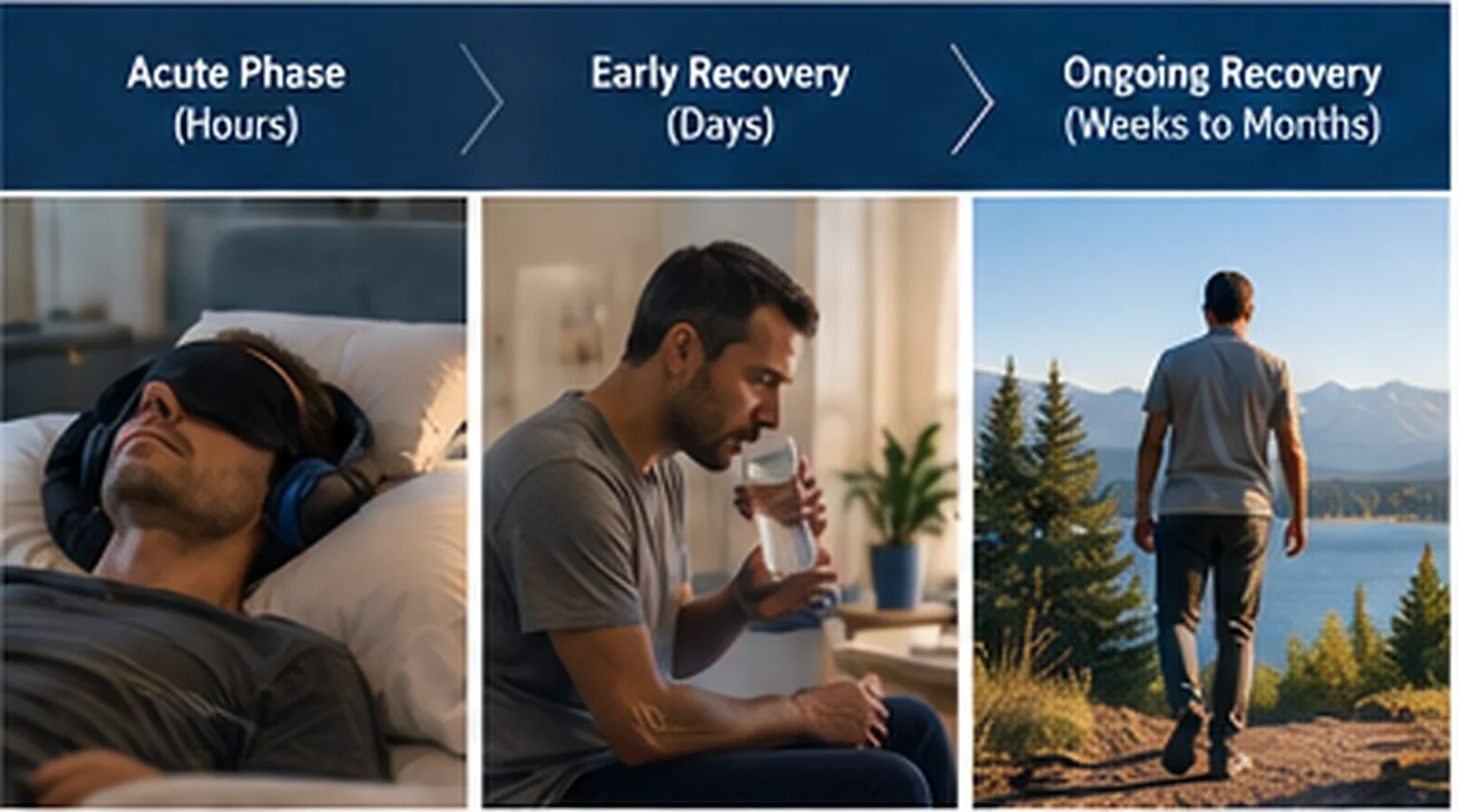
Acute treatment · Early recovery · Ongoing recovery. Timing is conceptual, not predictive.
Keep observing after the deepest oneirogenic phase resolves. Noribogaine lasts much longer than parent ibogaine, QT changes persisted beyond 24 hours in some monitored participants, severe poisoning cases show abnormalities lasting days, and ataxia, hydration, sleep, psychiatric state, and withdrawal can all continue to evolve. The literature has not established one observation time for every exposure. Follow the trajectory and unresolved risks.
| Domain | What to follow | What would delay discharge or justify higher level evaluation |
|---|---|---|
| Cardiac | Rate, rhythm, symptoms, QT/QTc trajectory and repeat 12 lead ECG based on prior abnormalities and clinical plan. | Persistent or worsening repolarization abnormality, ventricular ectopy, symptomatic bradycardia, syncope, arrhythmia or an ECG trajectory that has not been adequately explained. |
| Neurological | Consciousness, orientation, ataxia, tremor, mobility and focal findings. | Unsafe gait, persistent altered consciousness, seizure, focal deficit or a neurological course inconsistent with expected recovery. |
| Hydration / gastrointestinal | Oral intake, vomiting, urine output, orthostatic symptoms and electrolyte risk. | Persistent vomiting, inability to hydrate, meaningful electrolyte abnormality, aspiration symptoms or significant orthostasis. |
| Psychiatric | Sleep, behavior, thought process, unusual beliefs, mood, agitation, psychosis, suicidality and function. | Persistent confusion, dangerous agitation, manic activation, psychosis, severe insomnia with deterioration or inability to participate in a safe follow up plan. |
| Withdrawal and addiction | Objective/subjective withdrawal, craving, medication restart or transition plan, relapse risk and overdose prevention. | Uncontrolled withdrawal, unclear medication plan, imminent return to opioid use without overdose prevention or inability to access needed addiction care. |
| General function | Nutrition, pain, mobility, self care, capacity, supervision and transportation. | Inability to perform basic safe functions or absence of a realistic supervision/transportation plan when still clinically needed. |
| Sleep and activation | Ability to sleep or rest, reduced need for sleep, racing or pressured thought, irritability, grandiosity, increasing energy, and the relationship between sleep loss and behavior. | Progressive activation or persistent inability to sleep with manic or psychotic features warrants psychiatric reassessment and may delay discharge. |
| Relational reorientation | Whether the participant can again recognize the care team and environment as safe enough to collaborate, communicate needs, and participate in planning. | Persistent persecutory interpretation, inability to collaborate, or behavioral danger requires further assessment rather than routine discharge. |
In practice
Explain observation in terms of the person’s current recovery rather than a clock alone. Ask about comfort, frustration, sleep, food, and the wish to reconnect with others. Keep the participant informed about the assessment and the conditions needed for a transition to less intensive care.
Established clinical risk · Project synthesis / non peer reviewed
Knuijver (2022); Glue (2015); Henstra (2017) · 1 more
View Evidence 5 sources
Continue Through the Global Competencies
Discharge Readiness
Assess function and unresolved findings, then confirm medication, transport, supervision, and follow up.
Discharge Readiness
Assess function and unresolved findings, then confirm medication, transport, supervision, and follow up.
Restore independence gradually and evaluate the real environment the participant is returning to. Confirm mobility, transport, supervision when needed, medication ownership, follow up, overdose prevention, unresolved cardiac or psychiatric questions, and practical reentry issues such as driving, stairs, bathing, work, and caregiving. Document who owns each remaining problem.
Image context
Illustrative editorial image: post-session recovery and continuing-care planning. Not a clinical case photograph.
Discharge is a handoff to the next setting. Before the person leaves, the team should be able to explain why the cardiac trajectory is acceptable, why mobility and hydration are safe, why mental status is stable enough, how medications will restart or change, what the withdrawal and relapse plan is, who is supervising transport, and who owns the next contact.
- Physiological stability
Are vital signs and symptoms clinically stable for the person and consistent with the documented recovery trajectory?
- Cardiac reassessment
Has any prior QT, rhythm, ectopy or bradycardia concern been reassessed and resolved, stabilized, or transferred to an appropriate level of care?
- Mental status
Is the person sufficiently oriented and organized to understand instructions, participate in planning and communicate new symptoms?
- Mobility
Can the person transfer and ambulate at the level required by the discharge environment without unacceptable fall risk?
- Oral intake and hydration
Can the person maintain appropriate fluid and nutrition intake without persistent vomiting or clinically significant dehydration?
- Medication plan
Is there a documented plan for medications that were held, changed, restarted or newly prescribed, with responsible prescriber and timing clearly stated?
- Withdrawal / addiction plan
Is ongoing withdrawal adequately managed, and is there a plan for OUD or other SUD treatment rather than an assumption that detoxification is complete care?
- Transportation and supervision
Is the person leaving with safe transportation and appropriate supervision based on residual symptoms and local policy?
- Warning symptoms
Does the person know which symptoms require urgent or emergency evaluation, including syncope, palpitations, chest pain, seizure, persistent vomiting, severe confusion, psychosis or suicidality?
- Follow up and handoff
Are appointments, referrals, MOUD access, psychiatric care, primary care, cardiology/toxicology follow up when indicated, and contact responsibilities actually arranged rather than merely suggested?
- Experiential reorientation
Can the person distinguish the completed acute experience from the present environment, engage with the care plan, and communicate needs without persistent dangerous confusion or persecutory mistrust?
- Sleep and psychiatric trajectory
Is the person settling toward normal sleep and behavioral organization, or is there persistent reduced need for sleep, pressured or disorganized thought, grandiosity, paranoia, or escalating activation?
Practice note: make the discharge decision from the whole trajectory. Worsening ECG findings, new arrhythmia, syncope, unsafe gait, persistent vomiting, altered mental status, or an unfinished addiction care plan should keep the person in monitored care or trigger a higher level evaluation.
In practice
Rehearse the first evening at home with the participant and, with permission, their support person. Check that instructions can be understood and carried out. Make the next contact specific, address barriers to transport or food, and clarify who will review unresolved concerns.
Established clinical risk · Project synthesis / non peer reviewed
Knuijver (2022); American Society of Addiction Medicine. (2020); Sordo (2017) · 2 more
View Evidence 6 sources
Continue Through the Global Competencies
Early Departure Before Recommended Observation Ends
Explore the reason, assess capacity, address reversible concerns, and document a respectful risk discussion.
Early Departure Before Recommended Observation Ends
Explore the reason, assess capacity, address reversible concerns, and document a respectful risk discussion.
Assess capacity, explain unresolved risk, offer alternatives, use harm-reduction discharge when lawful departure continues, and document the decision. Do not physically detain a capable participant without lawful authority.
- Responsibility
- Program / system · Facilitator
- Applies in
- Multiple settings
Leaving before the team recommends discharge is a foreseeable event and should be planned for before dosing. Historical GITA and New Zealand resources used early-release forms. A modern approach should focus less on liability waivers and more on capacity, informed refusal, harm reduction, documentation, and keeping the person connected to care.
Assess capacity and immediate safety
Determine whether the participant can understand the current risk, alternatives, and likely consequences. Altered state, delirium, intoxication, mania, psychosis, or medical instability may change the legal and clinical response.
Explain the unresolved risk
State what has not normalized: ECG, rhythm, gait, vomiting, hydration, sleep, withdrawal, mental status, medication plan, or another issue.
Offer safer alternatives
Continued observation, hospital evaluation, a different level of care, delayed travel, responsible accompaniment, or another feasible option.
Do not physically detain without lawful authority
Participants who retain capacity generally retain the right to refuse or leave. Emergency detention standards depend on jurisdiction and actual danger, not provider preference.
Harm-reduction discharge if the person leaves
Provide emergency warning signs, medication instructions, overdose prevention, transport guidance, contact information, and the clearest available follow-up plan.
Document
Record capacity assessment, risks discussed, alternatives offered, participant decision, people notified with permission or legal authority, and the condition at departure.
PARTICIPANT: Wanting to leave should not automatically be interpreted as resistance. Ask what is driving the decision, what risks remain, what alternatives exist, and what would make the next step safer. If you are legally capable of deciding, the team should explain the risk without humiliating, threatening, or unlawfully detaining you.
FACILITATOR: Keep the conversation calm, bring the responsible clinician into the decision, preserve dignity, and help identify transport, support, medication, mobility, or environmental problems contributing to the request. Do not independently decide capacity or medical discharge.
CLINICAL TEAM / PROGRAM: assess capacity, unresolved medical and psychiatric risk, safe transport, alternatives, emergency instructions, documentation, and any legal obligations. A program should have a written early-departure process before the first participant asks to leave.
In practice
Begin by asking what leaving would solve for this person. A quieter space, contact with a trusted person, a different staff member, pain review, or a clearer explanation may address the immediate concern. Encourage continued observation through an honest discussion of its purpose and the agreed plan. Avoid interpreting a wish to leave automatically as resistance, lack of trust, or failure to surrender.
Bring the responsible clinician into decisions about capacity and discharge. If departure proceeds, help preserve continuity and practical safety with transport, written instructions, follow up, and a clear route back to care. Use the existing legal and clinical pathway rather than coercion or an improvised promise.
Expert practice · Project synthesis / non peer reviewed · Practice confidence: Expert Operational Practice
View Evidence 3 sources
Continue Through the Global Competencies
Post Discharge Safety Surveillance
Problem based follow up for cardiac, neurological, psychiatric, withdrawal, and functional concerns.
Post Discharge Safety Surveillance
Problem based follow up for cardiac, neurological, psychiatric, withdrawal, and functional concerns.
Discharge ends facility monitoring, not the biological or psychiatric story. Human toxicity reports describe cardiac abnormalities lasting days, noribogaine remains present far longer than parent ibogaine, and psychiatric complications can emerge after the acute oneirogenic state. The current evidence does not establish one universal post discharge ECG, laboratory, or psychiatric follow up schedule.
- Responsibility
- Facilitator · Clinical team
- Applies in
- Medically supervised administration · Research setting
A discharge plan should therefore identify what has not fully normalized, who owns each follow up question, which symptoms require urgent evaluation, and how quickly the team will make contact again. A participant with a completely uncomplicated course does not need the same follow up intensity as somebody discharged after marked QT prolongation, persistent vomiting, severe ataxia, medication changes, prolonged insomnia, or psychiatric activation.
The safest follow up is problem based. Cardiac abnormalities should have an explicit medical follow up plan. Medication changes need a responsible prescriber. OUD needs overdose prevention and rapid linkage to ongoing treatment. Persistent insomnia, mania, psychosis, suicidality, severe dissociation, or functional deterioration needs timely psychiatric care. No amount of “integration” should be used to delay ordinary medical or psychiatric evaluation.
| Domain | What to follow | Practice boundary |
|---|---|---|
| Cardiac | Unresolved or recently resolved QT/rhythm findings, syncope, palpitations, chest pain, or cardiology recommendations. | Document who will reassess and what symptoms trigger emergency evaluation. No universal outpatient ECG schedule is validated for ibogaine. |
| Hydration / gastrointestinal | Recent persistent vomiting, poor intake, electrolyte correction, renal issues. | Confirm the person can maintain intake and knows when recurrent vomiting or weakness requires evaluation. |
| Neurological / mobility | Residual ataxia, vertigo, falls, injury, focal symptoms. | Residual or worsening deficits should not be managed as integration alone. |
| Psychiatric / sleep | Sleep duration, reduced need for sleep, activation, paranoia, unusual beliefs, suicidality and function. | Escalating activation or loss of function requires psychiatric assessment. |
| Addiction / overdose | Craving, tolerance loss, access to opioids, MOUD, naloxone, pain plan and recovery environment. | Rapid follow up is particularly important after detoxification because overdose risk can rise after tolerance falls. |
| Relationship / support | Who is with the participant, where they are staying, conflict, coercion or isolation. | A profound experience does not create a safe recovery environment by itself. |
In practice
Agree on a reachable follow up contact and a backup route if the program cannot be reached. Ask concrete questions about sleep, mobility, food and fluids, medication use, mood, and daily functioning. Document a concern and the action taken rather than recording only that a call occurred.
Established clinical risk · Project synthesis / non peer reviewed
Henstra (2017); Hildyard (2016); Marta (2015) · 6 more
View Evidence 10 sources
Continue Through the Global Competencies
Post-Treatment Variability: Fatigue, “Grey Day,” and Afterglow
Fatigue, mood, sleep, craving, afterglow, and the risks of imposing a fixed recovery narrative.
Post-Treatment Variability: Fatigue, “Grey Day,” and Afterglow
Fatigue, mood, sleep, craving, afterglow, and the risks of imposing a fixed recovery narrative.
Treat “grey day” / “Gray Day” and afterglow as provider or program language, not diagnoses. Because “Gray Day” is used for different post-treatment time points across sources, document the actual day, symptoms, sleep, mood, judgment, impulsivity, craving, suicidality, and function rather than relying on the label. Slow irreversible decisions when confidence is running ahead of recovery.
- Responsibility
- Facilitator · Clinical team
- Applies in
- Multiple settings
Contemporary provider sources describe post-treatment variability, but they do not use the same language consistently. Enginsoy records one provider using “grey day” for a temporary emotional downturn around days five to six after flood dosing, while other providers describe an “afterglow” marked by unusual clarity, energy, or certainty. Ambio currently uses “Gray Day” differently, for the day immediately after treatment, when rest, exhaustion, sleeplessness, emotional processing, and supportive recovery may be prominent. The shared lesson is variability; the label itself is program-specific.
These are field-practice phenomenology and program language, not validated syndromes or fixed timelines. They are useful because they change what a facilitator watches for. A temporary low period should not automatically be interpreted as treatment failure, and a powerful positive state should not be treated as proof of durable recovery. Track sleep, mood, judgment, impulsivity, craving, substance exposure, suicidality, mania or psychosis symptoms, and ordinary functioning. Encourage major life decisions to survive contact with time, sleep, and the person’s usual environment.
In practice
Ask how the person is managing ordinary activities and decisions, not simply whether they feel good or bad. Describe changes over time in their own terms. Provider labels can open a conversation, but should not close assessment of worsening mood, persistent wakefulness, activation, or loss of functioning.
Expert practice · Participant phenomenology · Project synthesis / non peer reviewed
View Evidence 3 sources
Continue Through the Global Competencies
Sleep and prolonged wakefulness
Protect rest while assessing sleep trajectory, withdrawal, activation, medication effects, and psychiatric change.
Sleep and prolonged wakefulness
Protect rest while assessing sleep trajectory, withdrawal, activation, medication effects, and psychiatric change.
Protect opportunities for rest and track the trajectory rather than treating wakefulness as a trivial aftereffect. Reduce unnecessary stimulation, document sleep, and watch for escalating activation, pressured speech, impulsivity, grandiosity, confusion, worsening withdrawal, or other change that may require psychiatric or medical assessment. Medication decisions remain clinician owned.
- Responsibility
- Facilitator · Clinical team
- Applies in
- Multiple settings
In practice
Offer an environment conducive to rest while reporting the pattern to the clinical team. Ask how wakefulness feels to the participant, including fear, racing thoughts, unusual energy, or confusion. Avoid adding a sedating intervention casually; medication decisions require review of the full clinical context.
Participant phenomenology · Project synthesis / non peer reviewed
Marta (2015); Houenou (2011); Ona (2022) · 5 more
View Evidence 9 sources
Continue Through the Global Competencies
Continuing treatment and recovery
Coordinate addiction treatment, psychiatric care, relapse prevention, and the return environment.

Image context
Illustrative editorial image: continuing care and return environment support after treatment. Not a clinical case photograph.
Re-entry to Ordinary Life
Destination readiness, routines, relationships, obligations, and continuing support after discharge.
Re-entry to Ordinary Life
Destination readiness, routines, relationships, obligations, and continuing support after discharge.
A person can be medically ready to leave a treatment site and still be poorly ready for an immediate return to normal demands. Residual ataxia, sleep loss, fatigue, emotional openness, unfamiliar beliefs, medication changes, or simple physical depletion can make airports, driving, stairs, bathing alone, childcare, work, conflict, and high-stimulation social environments much harder than they look on a discharge checklist.
- Responsibility
- Facilitator · Program / system
- Applies in
- Multiple settings
Plan the first environment after discharge with the same seriousness as the treatment room. Transportation should not depend on the participant driving. Access to food, fluids, medications, sleep, bathroom safety, naloxone when relevant, and a person who knows what symptoms require help should be established before departure. Major relationship confrontations, financial decisions, abrupt medication changes, or other irreversible actions deserve additional time when the person remains sleep deprived, emotionally activated, or cognitively altered. No fixed number of days is supported for all participants; the plan should follow actual function and recovery.
Community ibogaine guidelines historically recommended extended on-site observation and weeks of follow-up contact, while experienced providers repeatedly emphasized that the treatment event alone was not enough. Those exact durations should not be treated as validated universal rules, but the operational lesson is sound: discharge should hand the person into an existing support structure rather than into an empty calendar.
Destination and Home-Environment Readiness
The place a participant returns to is part of the treatment plan. The New Zealand integrated-care model explicitly considered inadequate home environment a reason for further investigation before acceptance. This lens treats that as a recovery and safety variable, not a moral judgment. Housing instability, interpersonal violence, immediate drug availability, isolation, caregiving demands, inaccessible stairs, or lack of transportation can turn a technically successful discharge into a predictable failure. Identifying an unstable return environment should trigger support planning, harm reduction, referral, or a safer discharge plan before it becomes a reason to exclude someone simply because they have fewer resources.
Before discharge, confirm the actual destination, who will be present, whether the participant can safely manage mobility and self-care there, how medications will be handled, what happens if craving or psychiatric symptoms intensify, and how urgent medical help can be reached. If the return environment is unsafe, solve as much of that problem as possible before treatment rather than discovering it after the person is physiologically depleted and trying to travel home.
In practice
Help translate intentions into a manageable return to ordinary responsibilities. Ask what the person is returning to, who will be available, and what pressures may arrive immediately. Encourage pacing and continuity of care while leaving the person ownership of the meaning and direction they take from the experience.
Expert practice · Project synthesis / non peer reviewed · Practice confidence: Expert Operational Practice
View Evidence 3 sources
Continue Through the Global Competencies
Continuing Addiction Care
OUD and other substance disorders, MOUD, reduced tolerance, overdose prevention, and ongoing treatment.
Continuing Addiction Care
OUD and other substance disorders, MOUD, reduced tolerance, overdose prevention, and ongoing treatment.
Protect the continuing treatment plan from being eclipsed by the dosing event. Track withdrawal and craving, confirm overdose education and naloxone access where appropriate, coordinate evidence-based addiction treatment, and avoid framing detoxification as complete treatment. Reentry planning should include the actual housing, social, pain, medication, and cue environment the participant is returning to.
Image context
Illustrative editorial image: continuing care and return environment support after treatment. Not a clinical case photograph.
Ibogaine can reduce withdrawal and craving for some people, but OUD and relapse risk continue after the session. Loss of opioid tolerance can make a return to use especially dangerous. Plan continuing addiction care before administration and confirm it again before discharge. Buprenorphine and methadone remain evidence based options when clinically appropriate, and naloxone, overdose education, pain planning, and rapid follow up belong in the discharge conversation.
Opioid Use Disorder
Talk openly about methadone and buprenorphine when they fit the person’s clinical situation, even if the person came to ibogaine hoping to be completely opioid free. These medications have strong evidence for reducing mortality and improving retention in care. Keep the conversation noncoercive and explain how quickly tolerance can fall during abstinence.
- Assess current craving, withdrawal, pain, cue exposure, housing, social environment, overdose history, access to opioids, and the person’s actual confidence about remaining abstinent.
- Discuss methadone and buprenorphine as established treatment options when clinically appropriate, including how and where they can be accessed.
- Provide overdose prevention education and naloxone access according to local standards. Reduced tolerance after detoxification can make relapse especially dangerous.
- Clarify how pain will be managed. Untreated pain can destabilize recovery, while unsupervised return to opioid analgesics can increase overdose risk.
- Arrange psychotherapy, peer recovery support, contingency based or other evidence supported services when appropriate to the person’s goals and diagnosis.
- Address practical determinants of relapse such as unstable housing, unsafe relationships, financial stress, transportation, legal problems, and lack of meaningful daily structure.
- Schedule follow up soon enough to catch withdrawal, insomnia, craving, psychiatric change, or return to use while there is still room to respond.
Other Substance Use Disorders
For alcohol, benzodiazepines, stimulants, cannabis, and polysubstance use, build continuing care around the diagnosed disorder and the person’s actual risks. Alcohol and benzodiazepine dependence may require medically managed withdrawal. Stimulant use disorder often benefits from behavioral treatment and contingency management. Treat cooccurring psychiatric illness, trauma, chronic pain, sleep disturbance, and social instability directly; the ibogaine experience does not reliably resolve those problems on its own.
GENERAL ADDICTION MEDICINE: ASAM 2020 and the broader OUD literature provide the strongest continuing care evidence. Sordo et al. found lower mortality during opioid agonist treatment than during periods out of treatment. Strang et al. documented overdose risk after tolerance loss following detoxification. These data come from addiction medicine rather than ibogaine trials, but they speak directly to the risk created when an opioid dependent person becomes abstinent.
In practice
Make space for ongoing cravings, pain, or ambivalence without implying that they negate the session. Connect the participant with appropriate addiction treatment and practical support. A useful handoff names the next clinician or service, the agreed plan, and the route for help if the plan becomes difficult to follow.
Established clinical risk · Project synthesis / non peer reviewed
American Society of Addiction Medicine. (2020); Sordo (2017); Strang (2003) · 2 more
View Evidence 6 sources
Continue Through the Global Competencies
Relapse Prevention and Recovery Workspace
Translate triggers, warning signs, supports, medications, and a lapse response into a usable recovery plan.
Relapse Prevention and Recovery Workspace
Translate triggers, warning signs, supports, medications, and a lapse response into a usable recovery plan.
Build the relapse plan with the participant before discharge. Include medication treatment when appropriate, naloxone, reduced tolerance, support contacts, triggers, early warning signs, and a non-shaming re-entry plan after a lapse.
- Responsibility
- Facilitator · Program / system
- Applies in
- Multiple settings
A relapse-prevention plan should be built before discharge, not improvised after craving returns. I.ACT’s 2014 integrated-care materials included a formal relapse-prevention worksheet; Kroupa and Wells challenged the early “one treatment cure” narrative; Enginsoy’s provider interviews likewise emphasized ongoing support. The modern version should connect evidence-based addiction care with the participant’s own warning signs and recovery environment.
- High-risk situations
People, places, substances, pain, sleep loss, conflict, money, isolation, celebrations, trauma cues, or other situations that commonly precede use.
- Early warning signs
Changes in sleep, secrecy, idealizing past use, disengaging from support, skipping medications or appointments, escalating pain, hopelessness, overconfidence, or “I am cured” thinking.
- First response
Who to call, where to go, what meeting or appointment to attend, what environment to leave, and what coping action is realistic in the first hour.
- Medication and overdose protection
MOUD or other evidence-based medication plan where applicable, naloxone, lowered tolerance education, and a clear response after any return to opioid use.
- Support network
Named clinician, therapist, peer, family member, sponsor or recovery contact, with permission and expectations clarified.
- If a lapse occurs
Plan for immediate safety and re-engagement rather than shame, concealment, or an all-or-nothing interpretation of treatment failure.
- Next scheduled contacts
Dates or windows for the next medical, addiction, psychotherapy, peer, or integration contacts.
In practice
Build a small, usable response plan around the participant’s actual environment. Practice how they will contact help, what they will do when a high-risk situation begins, and how they will reconnect with care after a lapse. Keep overdose prevention and medication care attached to that conversation.
Expert practice · Project synthesis / non peer reviewed · Practice confidence: Expert Operational Practice
I.ACT Aotearoa/New Zealand. (2014); Kroupa (2005); Enginsoy (2025) · 4 more
View Evidence 8 sources
Continue Through the Global Competencies
Post Acute Psychological Care
Meaning making, sleep, dissociation, ontological distress, psychiatric assessment, and functional recovery.
Post Acute Psychological Care
Meaning making, sleep, dissociation, ontological distress, psychiatric assessment, and functional recovery.
Preserve participant authorship of the experience. Help organize what happened without imposing a therapeutic, spiritual, or neuroscientific interpretation. Track function, sleep, mood, unusual beliefs, dissociation, impulsivity, and safety over time. Persistent distress, deterioration, mania, psychosis, suicidality, or inability to return to ordinary function requires appropriate referral rather than being reframed as integration work.
- Responsibility
- Facilitator · Clinical team
- Applies in
- Multiple settings
The days and weeks after ibogaine can bring relief, exhaustion, poor sleep, grief, intense autobiographical material, unusual beliefs, relationship shifts, and a sudden sense that major life decisions are obvious. Make room for meaning while still watching function. A powerful spiritual or psychological experience can occur alongside mania, psychosis, medication withdrawal, or deterioration driven by prolonged sleep loss.
Some people leave with a coherent story. Some have fragments, disturbing material, or almost no visions at all. Early integration should stay grounded in ordinary functioning: sleep, hydration, medications, withdrawal and craving, psychiatric stability, relationships, and the ability to return to daily life. Meaning can unfold over time.
Let the participant keep authorship over what happened. If they describe an ancestor, entity, divine message, or morally charged vision, explore the experience and what it means to them. If they later question it, leave room for that too. The clinical job is to stay curious, track function and safety, and avoid turning the clinician’s metaphysical beliefs into part of the record.
- Meaning making
Help the person describe what occurred without pressuring them to adopt the clinician’s spiritual, neurobiological or symbolic explanation.
- Mood and anxiety
Track improvement, depression, irritability, anxiety, emotional lability and the degree to which changes affect ordinary function.
- Sleep
Ask directly about duration and need for sleep. Prolonged decreased need for sleep can be an early sign of mania rather than a benign aftereffect.
- Dissociation and ontological disruption
Explore depersonalization, derealization, altered self boundaries and existential uncertainty while monitoring function, distress and reality testing.
- Trauma and grief material
Support processing within appropriate therapeutic scope. Do not assume vivid memory or symbolic content is literal historical fact.
- Unusual beliefs
Maintain ontological humility. Ask how strongly the belief is held, whether it is flexible, whether it is causing impairment, and whether psychotic or manic symptoms are emerging.
- Major life decisions
Encourage time, sober reflection and consultation before irreversible choices when the person remains sleep deprived, activated, unusually certain or emotionally labile.
- Mania / psychosis
Rapidly arrange psychiatric evaluation when decreased need for sleep, escalating energy, grandiosity, psychosis, dangerous impulsivity or functional deterioration persists.
- Suicidality
Use ordinary suicide risk assessment and emergency pathways. A recent psychedelic experience does not make suicidality an integration issue that can safely wait.
- Function
Return attention to eating, sleeping, medication adherence, work, caregiving, relationships, finances and daily responsibilities. Function is a critical reality check on interpretation.
Where the Eight Circuit Lens is used, ontological humility is the useful principle. Help the participant examine the experience while leaving metaphysical conclusions with the participant.
In practice
Ask what the participant wants to explore and what they would prefer to leave undecided. Attend to sleep, mood, relationships, and functioning alongside meaning. Invite reflection without converting a vivid experience into certainty about memory, diagnosis, or the decisions another person should make.
Participant phenomenology · Project synthesis / non peer reviewed
Marta (2015); Houenou (2011); Ona (2022) · 5 more
View Evidence 9 sources
Continue Through the Global Competencies
When the Outcome Does Not Match the Hope
Evaluate disappointment, residual symptoms, adverse effects, expectations, and subsequent care.
When the Outcome Does Not Match the Hope
Evaluate disappointment, residual symptoms, adverse effects, expectations, and subsequent care.
Preparation should include the possibility that the experience is less dramatic, less complete, or less durable than the participant hoped. Some people have little imagery. Withdrawal relief can be incomplete. Craving can return. Trauma, pain, depression, relationship problems, or other symptoms may remain. A return to use can happen quickly even after a meaningful experience. None of those outcomes should be reframed as moral failure, insufficient surrender, or proof that the participant “did it wrong.”
- Responsibility
- Facilitator · Clinical team
- Applies in
- Multiple settings
PARTICIPANT: If the outcome is disappointing, tell the team what did and did not change. Do not stop medical or psychiatric treatment because a hoped-for effect did not occur, and do not assume that relapse means the entire experience was meaningless. The next step may be addiction treatment, medication, psychotherapy, pain care, psychiatric care, social support, or simply more time and reassessment.
FACILITATOR: Avoid rescuing the treatment narrative by inventing hidden success. Assess withdrawal, craving, mood, sleep, safety, function, relapse risk, expectations, and available support. Help the participant identify the next evidence-based or personally meaningful step without forcing a positive interpretation.
PROGRAM / SYSTEM: marketing and consent materials should not imply guaranteed visions, guaranteed detoxification, permanent abstinence, trauma cure, spiritual certainty, or a one-treatment solution. Follow-up pathways must exist for people whose outcomes are incomplete or negative.
In practice
Listen for the gap between what the person hoped would happen and what actually changed. Avoid rescuing the program’s narrative with a positive interpretation the person does not share. Help identify the next appropriate care step and keep follow up available when the outcome is incomplete or disappointing.
Participant phenomenology · Project synthesis / non peer reviewed
Marta (2015); Houenou (2011); Ona (2022) · 1 more
View Evidence 5 sources
Continue Through the Global Competencies
Adjunctive and Complementary Practices
Review the purpose, provenance, interaction concerns, and evidence limits of complementary practices.
Adjunctive and Complementary Practices
Review the purpose, provenance, interaction concerns, and evidence limits of complementary practices.
Ibogaine programs use many adjuncts, but the useful question comes before the modality: what problem is the adjunct supposed to solve? Organize adjuncts by purpose so a practice is not treated as valuable merely because a clinic offers it. Evidence strength, practitioner competence, participant preference, physical condition, and cultural provenance still apply.
- Responsibility
- Facilitator · Program / system
- Applies in
- Multiple settings
| Purpose | Modalities commonly used in practice | Boundary / evidence question |
|---|---|---|
| Preparation and expectation setting | Education, motivational work, therapy, coaching, journaling, intention work. | Does it improve informed choice, realistic expectations, coping, or alliance without promising an outcome? |
| Anxiety regulation and acute coping | Breathing practices, meditation, sensory reduction, music, grounding, supportive conversation. | Use voluntarily and adapt to respiratory status, trauma history, dizziness, sensory sensitivity, and participant preference. |
| Embodiment and physical recovery | Gentle movement, yoga, body-oriented practices, massage or bodywork, rest, nutrition. | Do not use strenuous or intense somatic work to override ataxia, pain, vertigo, cardiac symptoms, dehydration, or medical instability. Touch requires consent and scope. |
| Meaning making and integration | Psychotherapy, coaching, journaling, spiritual care, narrative review, peer discussion. | Preserve participant authorship and avoid installing the facilitator’s metaphysical, trauma, or diagnostic explanation. |
| Social support and accountability | Peer groups, family involvement, recovery communities, mutual aid, trusted support people. | Participation should be voluntary and protect privacy. Support networks should not substitute for necessary clinical care. |
| Behavior change and relapse prevention | Recovery planning, MOUD where appropriate, contingency planning, cue management, skills practice, follow-up appointments. | Tie the intervention to a concrete recovery need and evidence-based addiction care rather than relying on insight alone. |
| Ceremony, ritual, and cultural practices | Prayer, music, lineage-specific ritual, community ceremony, symbolic practices. | Use with honest provenance, appropriate authorization or competence, participant choice, and no claim that ceremonial authority replaces medical authority. |
FIELD PRACTICE POSITION: adjunctive practices should support the participant’s recovery plan rather than justify claims that a particular ceremony, therapy, or integration package is necessary for ibogaine to “work.” Comparative evidence on timing, intensity, and optimal combinations remains limited.
NAMED CONTEMPORARY PROVIDER COMMENTARY: Ambio co-founder Trevor Millar publicly describes an “A5 to Thrive” integration heuristic centered on daily practices such as meditation, exercise or movement, nutrition, learning, and deliberately filling the behavioral space left when an old pattern is interrupted. Retain this as an attributed integration heuristic, not a validated ibogaine aftercare protocol or evidence that any specific daily practice improves outcome.
In practice
Ask why the person is interested in the additional practice and what they expect it to do. Review optionality, timing, tolerability, and relevant medical concerns with the responsible team. Keep the provenance and evidence for each practice visible rather than bundling everything into an implied treatment requirement.
Expert practice · Project synthesis / non peer reviewed · Practice confidence: Expert Operational Practice
View Evidence 3 sources
Continue Through the Global Competencies
Records, adverse events, and quality improvement
Preserve the episode timeline, compare reported cases, and turn incident review into verified corrective action.
Acute treatment · Early recovery · Ongoing recovery. Timing is conceptual, not predictive.
Documentation Standard
Reconstruct the episode and separate observation, participant report, interpretation, and clinical action.
Documentation Standard
Reconstruct the episode and separate observation, participant report, interpretation, and clinical action.
Another qualified clinician should be able to pick up the record and understand the case. Document why the person was considered appropriate for the setting, which risks were identified, what was done about them, what product was given, how the person changed over time, and why major decisions were made. Keep patient report, clinician observation, objective findings, and interpretation visibly separate in the record.
Hand off the person and the numbers
Carry the physiological trajectory and the participant’s current support needs into the same handoff. The incoming team needs to know what changed, what has helped, what remains unresolved, and who owns the next decision.
Open the shift handoff form- Responsibility
- Facilitator · Program / system
- Applies in
- Multiple settings
- Eligibility and readiness
Relevant medical, psychiatric, neurological and substance history; coexisting conditions; consultations; baseline risk formulation; unresolved uncertainty; final authorization to proceed.
- Medication and substance review
Prescriptions, OTC products, supplements, nonprescribed drugs, recent substance exposure, last use, withdrawal risk, interaction concerns, clinician responsible for medication changes.
- Product traceability
Formulation, source, manufacturer or preparer when known, lot or batch, analytical verification, purity or alkaloid content when known, storage, measured or calculated amount, body weight if used, time of every administration, any redosing, concurrent agents.
- Baseline physiology
Vital signs, ECG date and interpretation, QT and QTc with correction method when reported, rhythm, relevant laboratory values, hydration, neurological baseline, mental status, current symptoms and withdrawal state.
- Course of treatment
Time stamped physiological observations, psychological observations, patient reports, monitoring changes, ECG changes, vomiting, mobility, ataxia, withdrawal, sleep and other clinically relevant events.
- Interventions and consultation
What changed, who was notified, clinical interpretation, orders or recommendations, intervention performed, response, reassessment and next decision point.
- Crisis or transfer
Trigger, decision authority, EMS communication, condition at transfer, ECG and laboratory information, treatment already provided, receiving facility, accompanying documentation and continuity responsibility.
- Discharge
Clinical condition, unresolved abnormalities, medication plan, withdrawal and addiction plan, warning symptoms, transportation, supervision, referrals, follow up appointments and patient understanding.
- Continuing care
MOUD discussion where relevant, overdose prevention, naloxone access according to local practice, therapy and psychiatric follow up, pain plan, social supports, referrals and outcome of handoffs.
- Quality review
Adverse event classification, near miss, protocol deviation, equipment or communication failure, root contributors, corrective action, owner and follow up audit.
Separate the Four Layers of the Record
- Participant report
"I feel my heart skipping" or "I have not used fentanyl since yesterday morning."
- Clinician observation
Patient appears pale, vomited twice, requires assistance to stand, speech is pressured.
- Objective finding
Heart rate 48 beats per minute; 12 lead ECG shows new ventricular ectopy; serum potassium result; time stamped rhythm strip.
- Clinical interpretation
Possible drug related bradycardia with reduced repolarization reserve; repeat ECG and clinician review required.
EXPERT PRACTICE: This documentation structure adapts ordinary clinical recording principles to the failure modes seen in ibogaine care and to the Reports and Records function of the Global Competencies. A prospective ibogaine specific documentation standard has not been validated.
In practice
Write a record another team can use, including what the participant reported in their own words, what was observed, who made decisions, and what happened next. Record preferences and support needs where they affect care. Use respectful descriptions and protect access to sensitive information.
Expert practice · Project synthesis / non peer reviewed · Practice confidence: Expert Operational Practice
View Evidence 3 sources
Continue Through the Global Competencies
Adverse Events and Near Misses
Recognize and record adverse events, near misses, protocol deviations, and delayed complications.
Adverse Events and Near Misses
Recognize and record adverse events, near misses, protocol deviations, and delayed complications.
Track the near misses too. A medication discrepancy found before dosing, a disconnected telemetry lead, a dead transfer number, a delayed ECG review, or an unexpected substance exposure can reveal a weak point even when nobody is harmed. Those events are often where the system tells you what needs fixing before the next patient pays for it.
- Responsibility
- Facilitator · Program / system
- Applies in
- Multiple settings
| Event type | Working operational definition | Examples relevant to this lens |
|---|---|---|
| Adverse event | Any unfavorable medical, neurological, psychiatric, behavioral or functional occurrence during or after the intervention, whether or not causality is established. | Vomiting, severe ataxia, clinically meaningful bradycardia, QT change, panic, confusion, seizure, injury, aspiration. |
| Serious adverse event | An event meeting the applicable research, regulatory or organizational definition for death, life threatening event, hospitalization or prolongation, significant disability, congenital anomaly, or other medically important event. | TdP, cardiac arrest, emergency hospitalization, severe aspiration, status epilepticus, medically significant persistent arrhythmia. |
| Near miss | A safety failure that reached the workflow but did not result in harm because it was detected, interrupted, or happened not to produce injury. | QT active medication missed in initial reconciliation but identified before dosing; low potassium discovered before administration; wrong product lot caught before use. |
| Unexpected physiological change | A new objective change outside the expected trajectory that requires reassessment even if it never becomes a formal adverse event. | New ventricular ectopy, new hypoxia, unexpected hypotension, prolonged altered consciousness. |
| Medication event | Error, omission, duplication, unauthorized change, interaction risk, or discontinuation problem. | Unplanned sedative use, missed maintenance medication plan, unreviewed CYP2D6 inhibitor, inappropriate restart. |
| Monitoring failure | Loss, delay, inadequate interpretation or failure to respond to clinically indicated monitoring. | Telemetry disconnected, QT measurement not reviewed, rhythm strip unavailable, equipment alarm ignored. |
| Equipment failure | Device or infrastructure problem that reduces ability to monitor or respond. | Defibrillator unavailable, ECG machine failure, backup power failure, suction malfunction. |
| Transfer event | Unplanned need for higher level care or difficulty executing the transfer plan. | EMS activation, delayed ambulance arrival, receiving facility refusal, inadequate handoff data. |
| Communication failure | Critical information did not reach the responsible person or was misunderstood. | Medication change not conveyed, abnormal ECG not escalated, transfer destination unclear. |
| Documentation failure | Record is incomplete enough to impair continuity, reconstruction or review. | Unknown administration time, absent product lot, missing ECG method, no documentation of clinical authority for a change. |
| Delayed recognition | A clinically important change was present before the team recognized its significance. | Progressive QT change or altered consciousness attributed to the expected experience until deterioration became obvious. |
Palitsky and colleagues proposed a structured way to assess adverse events in psychedelic assisted therapies. The useful idea here is simple: detect the event, describe it carefully, stay cautious about attribution, follow the course, and record enough detail for later review. Ibogaine adds more medical complexity because rhythm, repolarization, withdrawal, product uncertainty, and delayed toxicity may be prominent.
GENERAL PSYCHEDELIC SAFETY FRAMEWORK: Palitsky et al. (2024) supports systematic adverse event ascertainment. The framework is adapted for ibogaine; emergency thresholds come from the relevant ibogaine evidence and broader specialty standards.
In practice
Invite staff to report uncertainty and near misses without making concealment feel safer than disclosure. Preserve the sequence of observations and decisions, then review the response with the relevant clinical and operational leads. Offer the participant an appropriate explanation and route for questions after the immediate event.
Adverse event case reports
Case reports describe possible presentations and cannot estimate incidence. Unreported fields remain unknown.
| Exact source | Key numerical / clinical finding | Important limitations | Details and sources |
|---|---|---|---|
| Henstra et al., 2017 | QTc maximum 647 ms; atrial and ventricular tachyarrhythmias including TdP; QTc abnormality persisted for days | Single severe overdose case; uncertain product quality | Details
|
| Hildyard et al., 2016 | QT 640 ms on arrival; recurrent pause dependent polymorphic VT; peak QT 730 ms day 2; normalized by day 7 | Extreme reported exposure; single case; no incidence estimate | Details
|
| O’Connell et al., 2015 | QTc 527 ms with ataxia, tremor, nausea and vomiting; normalized during admission | Single high exposure case; estimated total assumes capsule uniformity | Details
|
| Edwards et al., 2025 | 6/7 had cardiotoxic features; reported events included arrest, TdP, QT prolongation and bradycardia | Referral bias; symptomatic cases only; no denominator | Details
|
| Alper et al., 2012 | Deaths 1.5 to 76 h after ingestion; comorbidity and/or commonly abused substances contributed in 12/14 cases with adequate postmortem data | Case ascertainment incomplete; no incidence denominator; causality heterogeneous | Details
|
| Papadodima et al., 2013 | Cirrhosis, >90% fatty infiltration, coronary disease, prior hypoK/hypoMg; sudden cardiac death 12 to 24 h after exposure | Single case with multiple competing mechanisms | Details
|
| Mazoyer et al., 2013 | Death about 12 h after ingestion; aspiration findings; coexposures in therapeutic ranges | Exact ingested quantity uncertain; multiple causal contributors | Details
|
| Marta et al., 2015 | Manic syndromes began hours to days after reported exposure; prolonged insomnia prominent | No analytical confirmation; confounding substances and withdrawal in some cases | Details
|
| Houenou et al., 2011 | Frank psychosis occurred after escalation to daily use; later schizophrenia course continued without ibogaine | Single case with preexisting prodromal symptoms; causality not proven | Details
|
Expert practice · Project synthesis / non peer reviewed · Practice confidence: Expert Operational Practice
Alper (2012); Edwards (2025); Henstra (2017) · 7 more
View Evidence 11 sources
Continue Through the Global Competencies
Quality Improvement
Review cases, assign corrective actions, rehearse response, and verify that changes reached practice.
Quality Improvement
Review cases, assign corrective actions, rehearse response, and verify that changes reached practice.
A safe program cannot depend on one clinician remembering everything every time. Build the workflow so medication discrepancies, unavailable equipment, unclear escalation authority, bad handoffs, and documentation gaps are hard to create and easy to catch. When the same problem happens twice, fix the system that allowed it.
- Responsibility
- Facilitator · Program / system
- Applies in
- Multiple settings
| Review domain | Questions for case review | Output |
|---|---|---|
| Case review | What happened in sequence? What was known at each decision point? Which actions were appropriate, delayed, omitted, or limited by the setting? | Chronology, contributing factors, corrective actions, responsible owner. |
| Near miss review | What almost happened? What barrier prevented harm? Was that barrier intentional or accidental? | System change that makes prevention reliable rather than lucky. |
| ECG review | Were baseline and follow up ECGs technically adequate? Was correction method documented? Were trend, morphology, ectopy and heart rate interpreted together? | Interpretation standard, training need, cardiology review trigger, documentation improvement. |
| Medication interaction review | Did reconciliation capture prescriptions, OTC products, supplements, recent substances and held medications? Were interaction mechanisms understood? | Revised reconciliation workflow, pharmacist involvement, updated interaction references. |
| Transfer review | Was the need for transfer recognized early? Was decision authority clear? Did EMS and the receiving facility receive enough information? | Transfer pathway correction and rehearsal. |
| Protocol deviation review | Was deviation necessary for patient care, accidental, or caused by an unrealistic protocol? | Protocol amendment, retraining, or documentation requirement. |
| Training review | Did staff have the skills their role required, including rhythm recognition, emergency response, behavioral support and documentation? | Competency remediation and reassessment. |
| Equipment review | Was required equipment present, functional, charged, calibrated and accessible? | Maintenance action, redundancy, purchasing or backup plan. |
| Communication review | Where did information stop, change meaning, or arrive too late? | Closed loop communication rule, escalation chain, role clarification. |
| Documentation review | Can the record reconstruct product, timing, baseline, change, response and disposition? | Template revision, required fields, audit feedback. |
| Follow up audit | Did the corrective action actually occur and reduce recurrence? | Verification date, metrics and decision whether further change is needed. |
Learning From Adverse Events and Protocol Revision
Jonathan Dickinson has described the early Global Ibogaine Therapy Alliance safety meetings as functioning much like morbidity and mortality conferences: providers discussed deaths and adverse events, examined emerging forensic evidence, and tried to convert what was learned into practical risk reduction. That history supports an open learning model in which serious events, near misses, and protocol failures become structured inputs to safer practice rather than private institutional memory.
A contemporary example comes from Ambio. On 21 January 2026, the program publicly disclosed that a patient had died while participating in its Detoxification Program and stated that the event and the changing street-drug environment led to enhanced screening, longer detoxification program durations, and a minimum 21-day stay for people using fentanyl before treatment. The public statement did not disclose the cause of death. The 21-day requirement therefore belongs here as an Ambio program-level quality-improvement response, not as a validated universal fentanyl washout, stabilization interval, or eligibility rule.
FIELD PRACTICE / QI BOUNDARY: transparent protocol revision can be documented as a named program response even when the event does not establish causality and the revised local rule has not been comparatively validated.
In practice
Choose changes that address a documented problem in the care pathway. Review whether the change was carried out and whether it created a new burden for participants or staff. Include participant feedback about communication, dignity, and practical support alongside clinical and operational measures.
Expert practice · Project synthesis / non peer reviewed · Practice confidence: Expert Operational Practice
Palitsky (2024); Dickinson (2026); Ambio Life Sciences. (2026)
View Evidence 4 sources
Continue Through the Global Competencies
Team responsibilities by phase
Extended Observation
| Clinical goal | Information required | Main risks | Required decisions | Documentation |
|---|---|---|---|---|
| Follow cardiac, neurologic, psychiatric, hydration, mobility, and withdrawal trajectories after peak subjective effects. | Repeat ECG when indicated, vital signs, mental status, mobility, intake, urination, vomiting, sleep, medication restart, ongoing withdrawal. | Late or persistent repolarization abnormality, recurrent arrhythmia, falls, dehydration, persistent confusion, mania or psychosis, unresolved withdrawal. | Continue observation, consult, transfer, or begin discharge planning when the trajectory is acceptably stable. | Resolution or persistence of each abnormal finding and rationale for continued observation or discharge. |
Discharge and Continuing Care
| Clinical goal | Information required | Main risks | Required decisions | Documentation |
|---|---|---|---|---|
| Move from acute safety to an explicit addiction, medical, psychiatric, and social care plan. | Cardiac and physiological reassessment, mental state, mobility, medication plan, withdrawal plan, transport, supervision, follow up, overdose prevention. | Premature discharge, medication confusion, reduced opioid tolerance, relapse, overdose, delayed psychiatric symptoms, loss of follow up. | Discharge, continue observation, refer, arrange MOUD or other addiction treatment, or transfer to a higher level of care. | Condition at discharge, unresolved issues, instructions, follow up, referrals, and who accepted responsibility for the next step. |