

Search competencies and applied modules
Ibogaine safety and risk management
During Treatment
Monitoring, physical support, communication, and the acute experience.
Educational material; not a treatment relationship.
3 Administration and Acute Monitoring
People, presence, and trust
Staying connected to support while the experience unfolds.

Image context
Illustrative editorial image: low-stimulation support during movement-sensitive nausea. Not a clinical case photograph.
Support during the experience
Staying connected when speech is difficult, the experience intensifies, or you want to leave.
Support during the experience
Staying connected when speech is difficult, the experience intensifies, or you want to leave.
An intense experience can make it hard to find words or know what you need. Before treatment, agree on a simple way to call for help. During the session, a facilitator can stay nearby, explain what is happening, or help adjust the room. Tell them early if sound, light, touch, movement, or the people around you are becoming uncomfortable; staff may not notice which part is troubling you.
Establish a way to communicate
Before administration, agree on how to summon staff and whether a short phrase or simple signal would help when speaking is difficult. Keep practical needs concrete: a dry mouth, cold feet, nausea, needing the toilet, wanting quiet, or wanting someone nearby. Staff should be able to help without requiring you to explain the meaning of the experience.
If the experience becomes overwhelming
If you feel overwhelmed or want the experience to stop, tell your facilitator what is happening and remain in a physically safe position. Ask for help before standing or moving, especially if your balance or coordination is impaired. A short statement such as “I am scared” or “The music is too much” gives the team a place to begin; you do not need to work out the cause yourself.
Once ibogaine is active, its effects cannot simply be switched off. The intensity can change over time. If the setting remains safe and the team finds no medical or psychiatric reason to change the plan, try to stay calm, use the support available, and remain in the supervised treatment setting while the acute state runs its course. You do not have to solve or interpret everything while it is happening.
Tell the team what might make the next few minutes more manageable. You might want less sound, more space, a familiar person, or an explanation of what staff are doing. Opening your eyes may help you feel more connected to the room. Some people need more light or orientation when darkness increases fear; others prefer quiet presence and fewer words. These adjustments may reduce distress while the drug remains active.
A concern about actual mistreatment, coercion, unwanted nonemergency touch, threatening behavior, recording, or another boundary violation still deserves direct attention. Tell the team what happened and ask for another staff member or the program’s advocacy contact if needed. Your rights continue during an altered state, and a report about staff conduct must be assessed on its own terms.
What supportive presence can look like
One person may speak calmly, orient you to the room, explain a necessary procedure, or sit quietly nearby. Another person may prefer more distance and fewer words. You can change a preference when it is safe to do so. Staff should avoid crowding, unnecessary movement, or pressure to disclose personal material during peak impairment.
Later in the session
As the intensity eases, your practical needs may change before your physical abilities fully recover. Continue asking for help with movement until the team has reassessed it. Rest, food, washing, and conversation can return gradually according to your condition and preferences.
Why we say this
Continue Through the Global Competencies
Light, sound, and the room around you
Adjusting music, smells, eye coverings, staff traffic, and unexpected interruptions.
Light, sound, and the room around you
Adjusting music, smells, eye coverings, staff traffic, and unexpected interruptions.
Light, sound, touch, alarms, smells, music, and people moving through the room can feel much stronger than usual. You can ask for reasonable changes when safety allows, including less light, less conversation, less music, or fewer people in the room. Medical monitoring may still need to continue even when the environment is made quieter.
Discuss sensory preferences before treatment
Discuss light levels, music or silence, eye coverings, temperature, scents, and touch. Strong incense, loud music, repeated conversations, or people entering the room may become difficult to tolerate. A preference you usually enjoy may feel different during treatment, so an adjustment can remain an option.
Ask for one specific change
Staff cannot always tell which stimulus has become uncomfortable. Speak up early and be as specific as you can: “The music is too much,” “The lights are bothering me,” “I need quiet,” or “That smell is making the nausea worse.” You can also say, “There are too many people in the room,” “I need more space,” or “I need someone else to sit with me.” Those details give the team something concrete to change while keeping necessary monitoring and access for care available.
Other useful requests include “I do not want to be touched,” “Moving is making me more nauseated,” “I am scared,” “I do not trust what is happening right now,” “Please explain what you are doing,” and “I want to open my eyes.” You do not need a complete explanation before asking for an adjustment. The facilitator can help clarify what is happening and bring in clinical support when needed.
Keep the room predictable
Ask staff to explain necessary sounds or procedures when they become confusing. One familiar voice and fewer simultaneous conversations can make communication easier. If reduced stimulation does not help, or confusion and distress are increasing, tell the team so they can assess more than the environment.
Why we say this
Continue Through the Global Competencies
What the experience may feel like
Imagery, sound, bodily sensations, memories, fear, and experiences with little visual content.
What the experience may feel like
Imagery, sound, bodily sensations, memories, fear, and experiences with little visual content.
People describe ibogaine experiences in different ways. Some report vivid imagery or memories; others have little imagery or an experience that is hard to put into words. You do not have to produce a particular story or decide what it means while it is happening.
You can tell staff what feels helpful and what feels intrusive. If fear, confusion, or distress is increasing, ask for support. The team should attend to the experience you describe while also checking for medical or psychiatric concerns.
There is no single sequence to reproduce
Reports include dreamlike scenes, autobiographical material, altered sound, unusual bodily sensations, changes in time or self experience, and periods with little imagery. Some people encounter remorse, grief, relationships, symbolic stories, or spiritual themes. The presence or absence of a particular kind of imagery does not by itself establish whether treatment has succeeded.
If the content feels frightening
If a scene feels threatening or you feel trapped in it, describe the immediate difficulty to your facilitator. Opening your eyes, orienting to the room, changing stimulation, or having a familiar person nearby may help. Staff should also pay attention to your ability to follow the conversation, your behavior, and your physical condition. Increasing confusion, loss of responsiveness, or inability to remain physically safe requires assessment.
Let meaning develop at your pace
Vivid imagery can feel deeply significant. You can record it later without deciding immediately whether it is literal memory, symbolism, or something else. A facilitator should not supply a compulsory interpretation or press for confession, forgiveness, or major life decisions while you are impaired. You retain authorship of what the experience comes to mean.
Experiences and support
| Experience | What people have reported | Support during the experience |
|---|---|---|
| Little or no visionary content | Minimal imagery, darkness, ordinary thoughts, or a largely bodily experience. | Tell the facilitator what the experience is like for you. The team should continue monitoring and support without pressuring you to produce imagery or treating its absence as failure. |
| Visual and narrative material | Rapid sequences, scenes, people, animals, landscapes, childhood memories, symbolic stories, or imagery that feels film like or dream like. | Describe an image if you want to, and take time before deciding what it means. Staff should avoid directing the story or treating symbolic scenes as established memories. |
| Dark or frightening material | Death, violence, isolation, guilt, fear, threatening entities, horrific scenes, or a sense of being trapped. | Tell the facilitator when fear becomes difficult to manage. Lower stimulation, orientation to the room, or a familiar voice may help. Staff also assess attention, behavior, and physical safety. |
| Auditory and sensory change | Buzzing, drumming like sounds, auditory hypersensitivity, altered body perception, changes in light, sound, time, space, touch, or synesthetic effects. | Describe the sound or sensation and when it began. Staff can check the surroundings and your physical condition while helping adjust light, sound, or other stimulation where appropriate. |
| Autobiographical review | Past relationships, childhood, regret, grief, remorse, guilt, alternative life trajectories, or a detached observer quality. | You can keep personal material private or describe selected parts. A fuller discussion can wait until you are more settled; staff should not press for disclosure during peak impairment. |
| Dissociation or altered self experience | Detachment from body or identity, ego dissolution, unusual sense of self, death or rebirth themes. | Tell staff if you feel detached or unable to orient yourself. They may ask brief questions and assess how you are functioning while helping you remain physically supported. |
| Relational threat or mistrust | The participant may suddenly feel watched, controlled, betrayed, unsafe, or convinced that caregivers are acting against them. | Name what feels threatening and what would help clarify the situation. You can request more distance or another staff member where possible. The team should consider the actual concern alongside medical causes of a sudden change. |
Why we say this
Continue Through the Global Competencies
If people around you feel threatening
How to communicate mistrust, request changes, and have both the feeling and the situation assessed.
If people around you feel threatening
How to communicate mistrust, request changes, and have both the feeling and the situation assessed.
During an intense altered state, ordinary monitoring, staff conversations, touch, or redirection can sometimes feel threatening or deceptive. If the people around you suddenly feel unsafe, tell them what feels wrong rather than trying to manage it alone. The team should be able to explain what they are doing, reduce unnecessary people and noise, and preserve reasonable choices while still keeping you medically safe.
Describe the specific concern
Ordinary staff conversations, equipment, redirection, or touch may begin to feel threatening during an altered state. You might say, “I cannot tell what you are doing,” “I need more distance,” or “I would feel better speaking with someone else.” The team can respond to a concrete concern more effectively than to an assumption about what you mean.
What staff can change
A familiar person can take the lead, explain actions before they happen, reduce crowding, and give you room where it is safe. Arguing over an interpretation may increase tension. Support can focus first on what you are experiencing and what would make the immediate interaction clearer.
What still needs assessment
Staff should take a report about actual conduct seriously while also checking for physical or psychiatric causes of an abrupt change. Increasing confusion, inability to follow simple safety instructions, severe sleep loss with unusual activation, or escalating unsafe behavior may require additional medical support. The descriptive term used in this guide is project language, not a diagnosis of the person.
Why we say this
Continue Through the Global Competencies
If imagery becomes overwhelming
Eye opening, orientation, and reversible ways to change the intensity of immersion.
If imagery becomes overwhelming
Eye opening, orientation, and reversible ways to change the intensity of immersion.
Ibogaine imagery can range from little or none to immersive visual or autobiographical material. If the experience becomes too intense, you can ask for help orienting to the room. Opening your eyes, hearing a calm voice, changing sensory input, or reducing immersion may help some people. You do not have to remain inside overwhelming imagery simply because someone believes distress is therapeutic.
Try a small change with support
Some people find that opening their eyes reduces closed eye imagery and helps them reconnect with the room. If you want to try this, tell the facilitator and take a moment to notice where you are. You can also request a different light level, less sound, a pause in conversation, or a familiar voice. A change should remain voluntary and reversible when medically safe.
Keep grounding practical
Ask for a clear explanation of the next physical action before staff touch or move you. If balance is impaired, remain supported rather than trying to ground yourself by walking. The useful question is whether an option helps you feel more oriented and able to communicate; it does not need to carry a spiritual interpretation.
Banana in traditional practice
Word of mouth from indigenous iboga practice describes offering banana to reduce visions when they become too intense. If a facilitator offers it, they should explain this purpose. You can accept or decline; staff should first check that you can swallow safely and that eating fits your care plan.
Why we say this
Continue Through the Global Competencies
Touch, privacy, and toileting
Agree on assistance before impairment and preserve consent and dignity during personal care.
Touch, privacy, and toileting
Agree on assistance before impairment and preserve consent and dignity during personal care.
Severe ataxia can make you dependent on other people for toileting, hygiene, movement, or repositioning while you remain fully aware of what is happening. Needing help does not remove your right to explanation, privacy, respectful care, and consent for nonemergency touch. Tell the team about staff gender preferences, touch boundaries, or anything that would make intimate care feel safer.
Make preferences explicit beforehand
Discuss who may help you transfer, use the toilet, change clothing, or clean up after vomiting. Tell staff about preferences regarding touch, exposure, gender of the helper, door position, and whether you want an explanation before each step. Ask what equipment or alternatives are available if walking becomes unsafe.
During assistance
A short explanation can make care easier to follow: what the person will do, where they need to touch, and what you can do to help. You can ask for a pause or adjustment when medically safe. Staff should use the minimum necessary exposure and avoid having unnecessary people present.
If an emergency changes the plan
Urgent care may require actions that could not be discussed in advance. The team should explain as circumstances allow and give you an opportunity afterward to understand what happened. An altered state does not erase a concern about disrespectful conduct; ask how to contact another staff member or advocate if needed.
Why we say this
Your rights, privacy, and complaints
Continue Through the Global Competencies
Movement and physical comfort
Practical help with balance, nausea, food, privacy, and rest.

Image context
Illustrative editorial image: assisted mobility during ibogaine related ataxia. Not a clinical transfer demonstration.
Balance, coordination, and assisted movement
Why awareness can remain clear while standing, reaching, and toileting become difficult.
Balance, coordination, and assisted movement
Why awareness can remain clear while standing, reaching, and toileting become difficult.
Ibogaine can temporarily make coordination extremely poor even when you remain mentally aware. Your legs may not do what you expect them to do, and standing or walking can become unsafe. Ask for help before getting up, including for bathroom trips. Needing assistance is expected and should not be treated as weakness or loss of dignity.
Recognize what poor coordination can feel like
Ataxia means impaired coordination. You may know exactly what you want to do while your arms, legs, or trunk do not carry it out reliably. Sitting up, reaching, walking, turning your head, or moving to a toilet can become unexpectedly difficult. Tell staff about any balance difficulty you had before treatment so new findings can be compared with your usual function.
Plan assistance before you need it
Keep the call method, water when permitted, and emesis supplies within reach. Discuss transfers, toileting options, clothing, and privacy beforehand. Ask for assistance before sitting up or standing, and allow staff to coordinate a slow transition. Avoid making a second movement while the first is still provoking spinning or nausea.
Report more than the word dizzy
Describe whether you feel spinning, imbalance, weakness, or a sensation of impending fainting. Report a fall, head impact, new focal weakness, severe headache, or sudden change in awareness immediately. Staff should reassess unexpected or worsening findings instead of assuming every difficulty is the expected coordination effect.
Why we say this
Continue Through the Global Competencies
Different kinds of dizziness
Spinning, imbalance, and feeling faint lead the team to different assessment questions.
Different kinds of dizziness
Spinning, imbalance, and feeling faint lead the team to different assessment questions.
“Dizzy” can mean several different things. You may feel spinning or motion, feel off balance, feel lightheaded as if you might faint, or feel worse specifically when you turn your head or change position. Tell the team what the sensation actually feels like and what makes it better or worse. That helps them distinguish a movement-sensitive experience from blood pressure, heart rate, hydration, neurological, or other causes.
Describe the sensation before trying to move
Spinning or a sense that the room is moving suggests vertigo. Difficulty coordinating a movement or staying upright is different from spinning. Feeling lightheaded, dim vision, weakness, or a sense that you may pass out can suggest presyncope, meaning near fainting. Several sensations may overlap.
Give the timing and trigger
Tell staff whether it began at rest, after turning your head, when sitting up, or when standing. Describe nausea, a racing or irregular heartbeat, chest discomfort, breathlessness, or any loss of consciousness. Those details help the team consider movement sensitivity alongside blood pressure, heart rhythm, hydration, and neurological causes.
Let staff help with the next transition
Remain supported and call for assistance rather than testing your balance alone. Slow, necessary movement may be more tolerable than repeated attempts to reposition yourself. A new or worsening sensation, fainting, chest symptoms, or an unexpected neurological change calls for clinical reassessment.
Why we say this
Continue Through the Global Competencies
Everyday care during a long session
Mouth care, clothing, temperature, fluids, toileting, rest, and dignity while you need assistance.
Everyday care during a long session
Mouth care, clothing, temperature, fluids, toileting, rest, and dignity while you need assistance.
Food and fluids should return according to how you feel, whether you can swallow safely, and what your medical situation requires. Word of mouth from indigenous iboga practice also describes offering banana to reduce visions when they become too intense. If this is discussed during your care, the facilitator should explain its traditional purpose and check whether you want it.
Make ordinary needs easier to meet
Before treatment, place permitted personal items within reach and discuss clothing, bedding, room temperature, oral comfort, and toileting. Tell staff if a position is painful or if you need help changing it. They can cluster necessary care to reduce repeated movement when motion worsens nausea.
Food and fluids return gradually
When swallowing is safe and the clinical plan allows it, small tolerated amounts may be easier than a large drink or meal. Tell staff what you have managed to keep down. Repeated vomiting, minimal intake, and bowel difficulties affect the care plan and should be recorded.
Preserve privacy and rest
You can ask for an explanation before intimate care, fewer people in the room, a covering, or a preferred helper when available. Staff should protect rest while still completing necessary observations. You do not need to turn every quiet period into conversation or psychological work.
Why we say this
Continue Through the Global Competencies
Nausea and vomiting
Motion triggers, safe positioning, fluid losses, and when comfort measures need medical review.
Nausea and vomiting
Motion triggers, safe positioning, fluid losses, and when comfort measures need medical review.
Nausea can become much worse with movement for some people. Sitting up, turning your head, standing, or walking may trigger a sudden wave of nausea or vomiting. Tell staff before changing position so they can help you move slowly. Repeated vomiting, blood in vomit, choking, trouble staying awake, or inability to keep fluids down needs clinical attention.
Tell staff before you move
For some people, turning the head or changing position can abruptly provoke nausea. Keep an emesis container within reach and request help before sitting up or going to the bathroom. Staff can reduce unnecessary movement and coordinate essential care more slowly.
Track what is happening
Tell the team when vomiting occurs, whether you can keep any fluid down, and whether there is abdominal pain, worsening dizziness, choking, or unusual sleepiness. Repeated losses can affect hydration and electrolytes. If you are too drowsy to swallow or protect your airway, food and drink need to wait for assessment.
Understand medication decisions
Antinausea medicines differ in their cardiac, sedating, and interaction effects. Let the clinician choose treatment in the context of the ECG, other medications, and your current condition. A comfort measure such as a cool cloth or an agreed change in stimulation can accompany care; persistent or complicated vomiting still needs medical reassessment.
Why we say this
Balance, coordination, and assisted movement
Supportive and Emergency Medications
Continue Through the Global Competencies
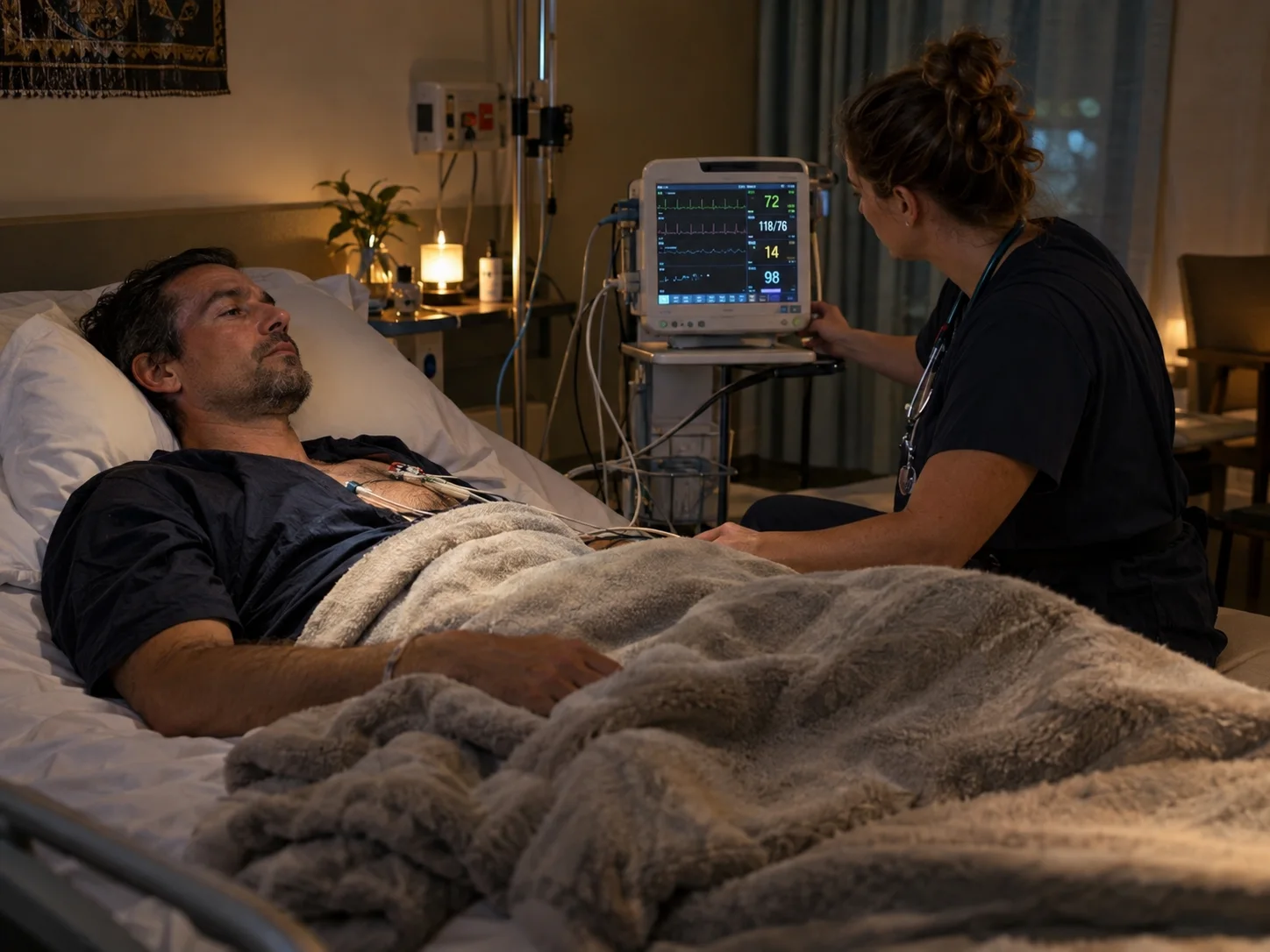
Image context
Illustrative editorial image: monitored treatment environment. Monitor graphics are synthetic and are not a diagnostic tracing.
Breathing, vomiting, and airway protection
Why alertness and swallowing matter, especially when vomiting or sedative exposure is involved.
Breathing, vomiting, and airway protection
Why alertness and swallowing matter, especially when vomiting or sedative exposure is involved.
Tell the team immediately if you are having trouble breathing, choking, becoming extremely sleepy, or repeatedly vomiting. Opioids, sedatives, alcohol, vomiting, and reduced consciousness can change airway risk. Staff may need to reposition you, use oxygen or other monitoring, or escalate care depending on what is happening.
Help the team interpret drowsiness
Tell staff about opioids, alcohol, sedatives, sleep medicines, or other substances used recently, including anything outside the agreed plan. These exposures can change how clinicians interpret breathing and alertness. Describe sleep apnea or other breathing conditions and any prior problem with sedation or anesthesia.
Eating, drinking, and vomiting
If you feel too sleepy to swallow normally, begin choking, or repeatedly vomit, call staff before trying more food or fluid. Assistance with position, an emesis container, suction, oxygen, or further medical care may be needed depending on the assessment. An altered experience does not remove the need to check airway protection.
Changes that need prompt attention
Report trouble breathing, choking, unusual chest symptoms, or difficulty staying awake. If someone becomes unresponsive or has severe breathing difficulty, staff should initiate emergency care. A facilitator can explain what is happening as circumstances allow while the clinical team addresses the immediate problem.