
The Original Model
Leary’s seventh circuit proposed direct communication between the nervous system and DNA. Its stages moved from receptivity to genetic information, through intelligent control or manipulation of that information, toward linkage among genetic intelligences. He associated this with consciousness at the scale of evolutionary time, communication across species, and the possibility of changing the biological future. DNA was presented as a carrier of a much larger evolutionary intelligence, not simply as a metaphor for family history. (Leary, 1977)
These claims must remain visible if the model is to be described honestly. Contemporary genetics does not establish conscious access to DNA as an ancestral archive, and psychedelic experience is not a demonstrated method of directly manipulating inherited genetic information. The practice translation follows experiences of lineage, inheritance, continuity, and responsibility without borrowing the historical mechanism.
Speculative claimThe extraordinary mechanisms described above belong to the historical theory and lack adequate empirical support.
Contemporary Translation
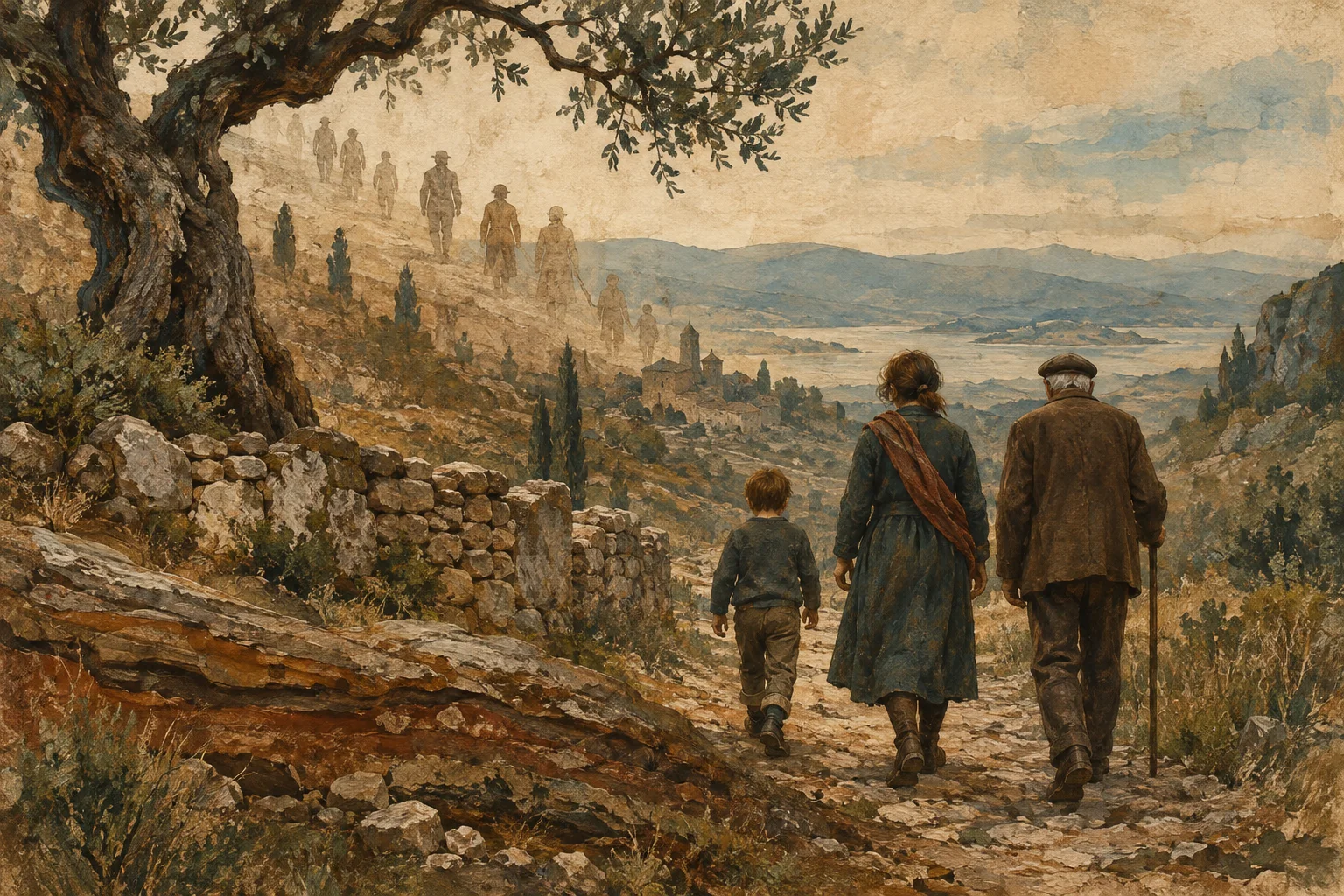
People inherit both biology and environments. Genetic variation is one form of inheritance; developmental exposure, family relationships, cultural transmission, social learning, resources, deprivation, and repeated trauma exposure are others. Attachment patterns, family stories, silence around particular events, religious beliefs, and rituals can shape how later generations understand themselves. These pathways can interact, but they should not be collapsed into a single claim that an ancestor’s experience is stored intact inside a descendant.
The practical investigation often begins with ordinary history. What happened in the family? Which details are documented, which are remembered by relatives, and which are interpretations? How were danger, affection, conflict, grief, or responsibility handled? A participant may recognize a pattern of silence or caregiving that has crossed generations without needing a genetic explanation for it. Careful inquiry also leaves room for exceptions, changes, and family members whose accounts differ.
Different accounts of inheritance
Documented history
Events, relationships, and circumstances supported by records or other evidence.
Experienced ancestry
An encounter or narrative reported by the participant; its historical cause may remain unresolved.
Biological claim
A proposition about inheritance that requires its own evidence.
A reading aid drawn from this chapter’s practice discussion.
Epigenetics, inheritance, and memory
Epigenetics concerns processes that regulate gene activity without changing the DNA sequence itself. Yehuda and Lehrner review possible epigenetic contributions to intergenerational effects of trauma, including developmental exposures and potential pathways involving parental experience before conception. They emphasize that the strongest controlled evidence available in their review comes from animal research and that human studies face substantial methodological difficulties. Their account does not reduce intergenerational effects to one biological pathway. (Yehuda & Lehrner, 2018)
Several distinctions matter for practice. Exposure during pregnancy can affect a developing offspring directly; that is different from establishing an effect transmitted through an unexposed generation. Shared environments, family relationships, and social conditions can also produce similarities across generations. A biological association in a human study does not by itself identify its cause, establish inevitability, or explain a particular person’s session.
Inheritance is not the same as autobiographical memory. Evidence that parental circumstances can influence development does not establish storage and retrieval of an ancestor’s lived episodes in DNA. A vivid scene experienced as ancestral memory therefore remains a report of an experience, even when it concerns a family history that includes real suffering. “Epigenetic” should not become a scientific sounding substitute for evidence the practitioner does not have.
Ancestry as experience
Participants may encounter deceased relatives, feel the suffering of earlier generations, identify with the history of life, or experience a new responsibility toward people who will live after them. A sense of “carrying” something can express grief, loyalty, obligation, bodily distress, or a spiritual understanding of kinship. It can be meaningful to work with these possibilities while remaining uncertain about the experience’s external source. Cultural and religious traditions may already provide a coherent language for the encounter. (Argyri & Evans, 2025)
Deep time experiences can also shift a person’s relation to mortality. Feeling part of a longer continuity of life may soften isolation or change the way they imagine death. The practitioner can ask how this affects the person’s choices and relationships without treating the experience as a recovered biological record or a demonstration of communication across species.
In Practice
A participant says, “I felt my mother’s trauma and her mother’s trauma. It was stored in my DNA.” The practitioner separates what was felt from the proposed mechanism and asks what is known about the family’s actual experiences. They might explore whether the person grew up around fear, silence, caregiving demands, or repeated loss. Documentation preserves the participant’s explanation as their explanation and does not convert it into a genetic finding.
Another person experiences evolutionary time and returns with less fear of death. Integration may involve discussing grief, relationships, or how they want to use their time. The helpful change can remain connected to the experience without requiring the practitioner to certify its cosmology.
A participant attributes a medical illness entirely to ancestral trauma and wants to reject treatment. The practitioner can explore the family narrative while explaining that the session has not established the illness’s cause. Appropriate medical evaluation and consultation remain necessary. A meaningful account of suffering may coexist with biological, environmental, and clinical information that the experience did not reveal.
Later, a relative provides records that contradict a detail the participant felt certain about. The practitioner helps make room for correction without humiliating the person or discarding everything the experience meant. An interpretation can change while compassion for a family member, recognition of a learned pattern, or an intention to parent differently remains useful.
Evidence Boundary
Intergenerational research supports careful investigation of biological, developmental, relational, and social pathways. It does not establish autobiographical ancestral memory in DNA, conscious genetic communication, or the accuracy of psychedelic family narratives. Human epigenetic findings require attention to exposure, measurement, confounding, and replication. They offer no basis for announcing that a participant has discovered or removed an inherited trauma through a single session. (Yehuda & Lehrner, 2018)